The Latin American chemical regulatory cooperation forum (LARCF) once again brought together chemical regulators, the regulated community, and international specialists for an eventful two-day meeting in Argentina this week. The warmth and spirit of cooperation have become a hallmark of these events.
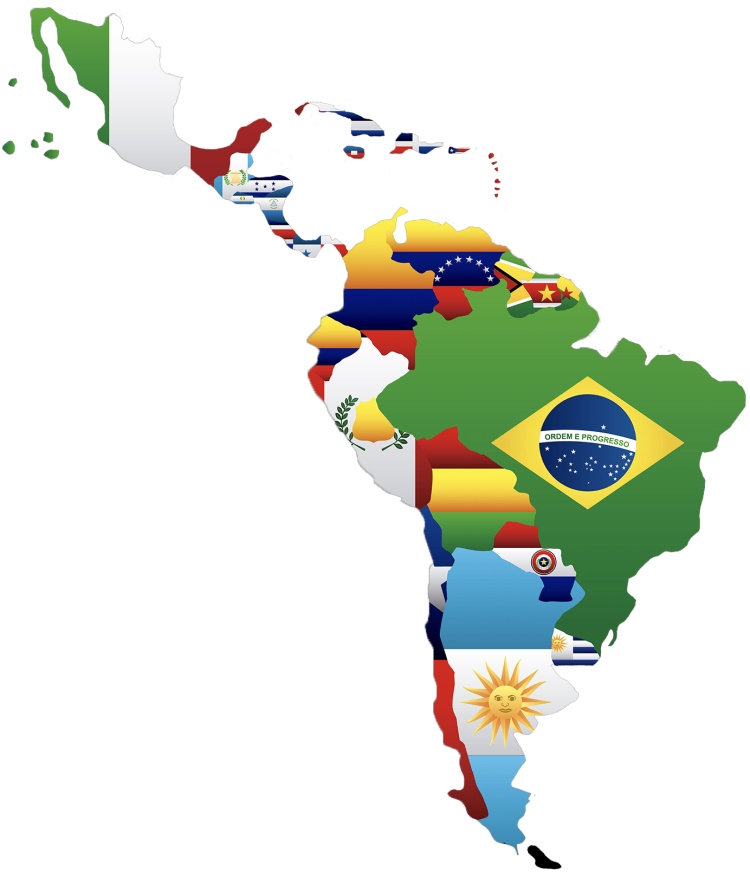
Officials from at least ten different countries in the region were in attendance (Argentina, Brazil, Chile, Colombia, Costa Rica, El Salvador, Honduras, Dominican Republic, Mexico, and Uruguay) and presented updates — and challenges — on adoption of their modern chemical regulatory frameworks. Officials and experts from Canada, the US, UNEP and GFC — along with international chemical industry associations — shared international perspectives and recommendations.
Given the presentations by regional governments, 2027 is going to be (another) high-impact year.
Here are some of the key takeaways I noted from presentations by national officials — and conversations during the event:
⭐ BRAZIL
➡️ The all-important implementing regulation to Brazil’s framework chemical law (“Brazil REACH”) could be out “any day.”
➡️ Government has already begun work with technical support to develop the registration platform.
➡️ In response to my question, officials and industry representatives alike confirmed that Brazil’s OR will relieve local importers of their registration obligations — a major development, as Brazil remains the only country so far to allow foreign companies to register their own substances. (The implementing regulation, as well as additional official guides, will flesh out the role and responsibility of the OR even further.) (Spoiler: Brazil may not be the only country with an OR option — read on for more.)
Why it matters: For foreign manufacturers who have been waiting to understand how Brazil REACH would treat them, this is the clearest confirmation yet that the OR model — not direct registration through a local importer — should be considered for path forward.
⭐ COLOMBIA
➡️ As one of the first movers with its REACH-inspired scheme, Colombia is now moving onto prioritization of substances of concern.
➡️ The long-awaited prioritization regulation should be published by the end of this year — and will finally provide clear law on what constitutes a “new substance” (which will by default enter a higher priority category).
➡️ The first list of prioritized substances — subject to risk assessments conducted by industry — would be published by the end of 2027.
➡️ Application of GHS to consumer goods is likely still a way off.
⭐ CHILE
➡️ 2027 is a big year — the first-time registration (“notification”) of substances in hazardous industrial mixtures.
➡️ Chile hinted it may be revising its foundational Decree 57/2019 to include some type of OR option and crucial protections for confidential business information (CBI). Without that latter reform, the registration of substances in mixtures running from February to August 2027 is going to be a high-stakes affair for companies.
➡️ If Chile does adopt an OR option, it would become the second country in the region to offer foreign manufacturers this avenue for controlling the fate of their substances and information in these new inventories.
⭐ COSTA RICA
🔍 Flagging this as ONE TO WATCH! All eyes are on Costa Rica’s total overhaul of its existing chemical regulation (Decree 40457-S). If adopted as presented, the reform represents a sea change — moving from a simple registration of hazardous substances to a complex system covering even non-hazardous substances. The draft of that major revision should be posted for public comment in the first quarter of 2027.
➡️ The first group of five prioritized substances — taken from 34 prioritized substances off the existing list of registered hazardous substances — will be subject to additional phased-in requirements. Much to digest here.
⭐ MEXICO 🚨 BIG NEWS HERE! Officials announced that a draft chemical framework law in development since 2019 is apparently well-advanced and could be presented for public consultation (prior to being sent to Congress) as early as January 2027. (This Executive Branch initiative should not be confused with a chemical bill currently before Congress presented by a political party in Mexico.)
Why it matters: Mexico has been the notable holdout among the region’s major economies without a national chemical management framework. If this timeline holds, 2027 could be the year Mexico finally joins Brazil, Chile, Colombia, and Peru on a path toward a modern chemical control regime.
⭐ HONDURAS ➡️ A first framework regulation on industrial chemical substances has been drafted and sent to Congress for review. (This chemical instrument is part of a package of four regulations, including one on hazardous waste, one on contaminated sites, and a final one on waste electric and electronic equipment (WEEE).)
This year’s event — like the previous meetings — impressed me with the spirit of transparency, collegiality, cooperation, and genuine commitment from regulators and the regulated sector alike. International speakers noted that LARCF is an exportable model for other regions working on improving regulations and practices around chemicals — and beyond.
As ever, Latin America remains at the intersection of my work and my passion.
Want this delivered weekly? Subscribe to Around Latin America on LinkedIn to get each edition straight to your inbox. Miss an edition? Check out the word searchable repository: www.ambientelegal.com/blog
Tracking Brazil’s new chemical management law? Visit www.BrazilREACH.comfor plain-English guidance on Law 15.022/2024, including what an Only Representative structure means in practice.
Questions about how any of this applies to your business? Reach out directly at mowen@ambientelegal.comto talk about how we can help your business succeed in Latin America.
This site provides general information based on publicly available sources and is not legal advice.
© 2026. All rights reserved. This publication is protected by copyright and monitored by AI-powered content tracking systems. Unauthorized use, reproduction, or distribution is strictly prohibited.
