
Latin America Supply Chains Under US Tariff Pressure with Brazil the Most to Lose
Two separate US Trade Representative (USTR) actions published on June 2, 2026, put significant portions of Latin America under potential US tariff pressure. The two proceedings are distinct in scope and severity, and companies with supply chains touching the region should understand both.
· The Forced Labor Investigation: Impact for Most of Latin America
Back in March, the US started investigations into sixty (60) countries to determine whether each had failed to impose and effectively enforce a prohibition on the importation of goods produced with forced labor. Now, the US has determined that all 60 hailed that standard and proposing to impose tariffs because of it.
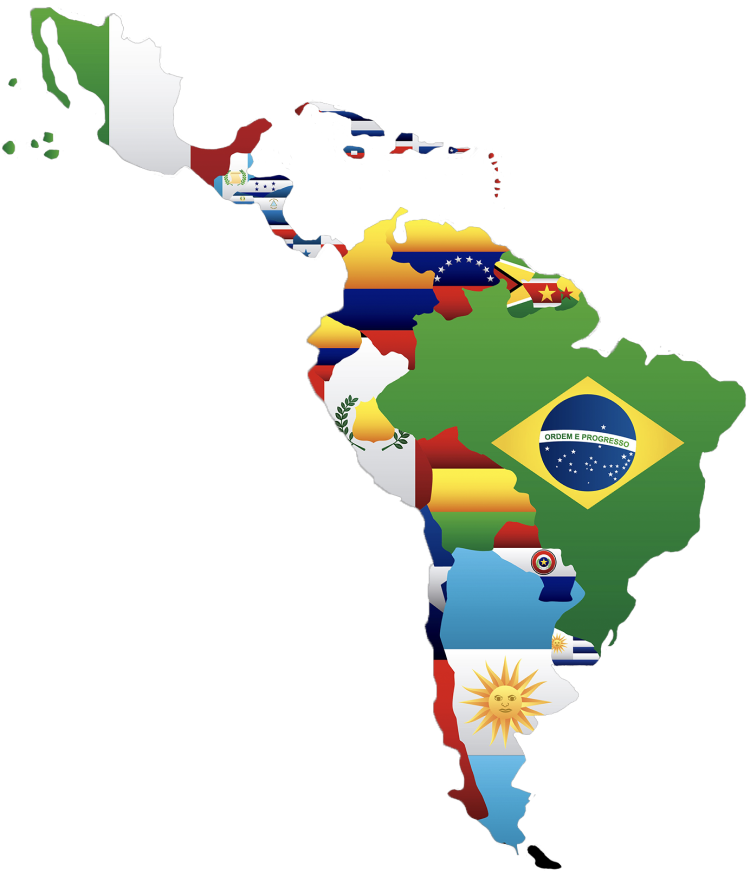
A vast majority of Latin American countries are in the cross hair for the allegations of failure to control forced labor in imports: Argentina, Brazil, Chile, Colombia, Costa Rica, Dominican Republic, Ecuador, El Salvador, Guatemala, Guyana, Honduras, Nicaragua, Peru, Uruguay, and Venezuela.
The proposed tariff structure has two tiers. Countries that have a forced labor prohibition in place but fail to enforce it effectively face a proposed 10% additional duty. Here, Mexico and Ecuador fall into this category. Countries that have neither imposed nor committed to such a prohibition face a proposed 12.5% additional duty. This latter group includes Brazil, Chile, Colombia, Argentina, Peru, and most other Latin American countries on the list.
Written comments are due July 6, 2026. A public hearing is scheduled for July 7. Tariffs are not yet in effect. (Link to USTR determination below.)
· Brazil Faces a Separate, Targeted Investigation
Brazil is also the subject of a country-specific investigation initiated in July 2025. Now, the US issued its determination on that separate Brazil-focused investigation on June 2, 2026, as well. The US found several Brazilian acts, policies, and practices actionable, covering digital trade and electronic payment services, unfair preferential tariffs, anti-corruption enforcement, intellectual property protection, ethanol market access, and illegal deforestation.
On the deforestation finding specifically, USTR concluded that despite having a legal framework to combat illegal deforestation, Brazil has historically failed to enforce it effectively, and that illegal deforestation persists. USTR proposed 25% tariffs on all goods of Brazil, with specified exemptions. This finding comes at a time when Brazil has been lauded
The statutory deadline for US responsive action on this investigation is July 15, 2026. Negotiations between the two governments are ongoing.
· Deforestation? Not so Fast
The USTR deforestation determination lands at a moment when Brazil’s own enforcement data tells a different story. Independent satellite monitoring shows Amazon deforestation fell 36% between August 2025 and March 2026. That would be the lowest level for that period since 2017. Brazil’s total native vegetation deforestation fell below 1 million hectares in 2025 for the first time since 2019, representing a 42% reduction in primary forest loss compared to 2024. Brazil’s Environment Minister has stated the country is on pace to record the lowest Amazon deforestation since records began in 1988 if current trends hold.
Brazil will almost certainly cite these figures prominently in public comments and in ongoing negotiations with the US government. Whether the USTR determination reflects a historical pattern that the data shows is now changing — or whether enforcement gaps persist despite the aggregate improvements — is likely to be the central factual dispute in the July 6 hearing.
The Bottom Line
Companies sourcing from, manufacturing in, or exporting to Latin America face a two-level risk. The forced labor tariff proposals affect the entire region and could add 10 to 12.5% to the cost of imports into the US from most Latin American countries. The Brazil-specific action is more acute with a potential 25% tariff overlay on Brazilian goods with a decision deadline of July 15, 2026. Neither set of tariffs is final, but the timeline is short and the comment windows are closing.
Link to forced labor determination:
Link to Brazil-specific determination:
Argentina: Battery Chemical Limits Unchanged, Process Simplified
Argentina is not new to battery regulations. For years, it has long prohibited the sale of primary batteries exceeding strict limits on mercury, cadmium, and lead content. Those limits are not changing. What just changed is how companies prove compliance — and the new approach is significantly less burdensome.
In keeping with other red-tape reductions promised by current President Milei, the new Joint Resolution 1/2026 will make it easier for companies bringing covered batteries to market. The old system required a prior certification that made importers obtain approvals from local Argentine entities before bringing covered batteries into the country. That prior authorization requirement is gone. In its place: a sworn declaration of conformity by the manufacturer, assembler, or importer. Distributors and retailers must hold a copy and produce it on request.
Joint Resolution 1/2026, published June 5, 2026, replaces a prior certification regime that required importers to obtain approvals from local Argentine entities before bringing covered batteries into the country. That prior authorization requirement is gone. In its place: a sworn declaration of conformity by the manufacturer, assembler, or importer. Distributors and retailers must hold a copy and produce it on request.
What Is Covered
The resolution covers primary batteries and cells … and critically, also covers any device or product containing primary batteries, whether the batteries are easily removable or not. A product with an integrated or sealed-in battery is in scope. The declaration of conformity for battery-containing products must include a separate annex identifying the product, brand, model, origin, manufacturer, and which battery or batteries the product uses.
What Is Excluded
Primary lithium batteries, rechargeable batteries, batteries in medical devices or non-commercial research equipment, and test samples are all excluded from scope.
The Substance Limits
The underlying limits remain unchanged: maximum 0.0005% mercury, 0.015% cadmium, and 0.200% lead by weight. Batteries exceeding those thresholds are classified as hazardous waste under Argentina’s Hazardous Waste Law and subject to its penalties and procedures.
Mutual Recognition
The most significant practical change for international companies is the mutual recognition pathway. Companies that have already demonstrated conformity with recognized foreign technical bodies, yet to be listed by the enforcement authorities, will not need to complete any additional local procedure. For companies with existing EU, US, or other recognized certifications, Argentine market access just got simpler. IEC CB Scheme certificates are explicitly recognized.
Conformity Marking
Standalone batteries must carry a conformity marking — mandatory, but not until 12 months after entry into force. For battery-containing products, the conformity marking is optional.
Transition
Existing certificates issued under the prior regime remain valid for their original term. Certification bodies and testing laboratories currently authorized have 12 months to adapt to the new scheme.
Link to Resolution:
https://www.boletinoficial.gob.ar/detalleAviso/primera/342834/20260605
Brazil: Chemical Precursor Rules Changing
All the talk these days is about Brazil REACH and the new chemical registration system coming. And that makes sense given the sea change it represents. But that new system will be superimposed on an existing one that includes controls on so-called chemical precursors and essential chemicals — substances that, while having entirely legitimate industrial uses, can also be diverted to the illicit manufacture of narcotics, psychotropics, or dependency-producing substances. For companies with product formulations that include such controlled substances, chemical precursor rules — and each country has one — can trigger important compliance obligations regardless of LATAM REACH.
Brazil’s Federal Police, which administers the precursor control framework under Law 10.357/2001, is consulting on a new Instrução Normativa that will replace the two existing implementing instructions from 2020 and 2021. The consultation runs through June 15, 2026.
What Is Changing
The most significant operational change is the complete digitalization of the compliance cycle — registration, licensing, monthly reporting, inspection processes, and administrative proceedings will all run exclusively through the SIPROQUIM system, with digital signature requirements throughout. Monthly reports are due by the 15th of the following month and are required even in months with no movement of controlled substances.
The penalty structure is also being overhauled. The current framework has a single broad penalty range. The proposed IN replaces it with a tiered system: minor or first-time infractions may receive a formal warning rather than an immediate fine; escalating fine tiers run from R$20,000 up to R$350,000 depending on severity; and repeated serious infractions can trigger license suspension or cancellation. Proportionality principles — aggravating and mitigating circumstances, dosimetry rules — are now explicitly codified, giving companies more predictability in how penalties are assessed.
What Is Not Changing
The substance lists and concentration thresholds under Portaria MJSP 204/2022 are not part of this consultation and remain in force. Those lists cover seven categories of controlled substances — drug precursors, solvents, pharmaceuticals and adulterants, acids, bases, reagents, and a broader category of chemical products — with concentration-based thresholds and specific exemptions that companies should already have mapped.
Link to consultation:
https://brasilparticipativo.presidencia.gov.br/processes/inquimicos/f/4683
Curious about Brazil REACH? Check out: www.brazilreach.com
Brazil Joins the Trend for Pollutant Reporting Systems
Brazil is moving forward with a long-standing plan from back in 2000 to develop a Pollutant Release and Transfer Registry — RETP using the Brazilian Portuguese acronym, or RETC in Spanish. The decision is not novel for the region, as various countries have had similar systems in place for years, including Mexico, Chile, Peru, Colombia, and emerging frameworks in Honduras, with consideration underway in half a dozen more.
What the RETP Does
The RETP is a mandatory annual reporting system for emissions and transfers of listed pollutants to air, water, and soil. Covered establishments must report emissions to each environmental compartment as well as off-site transfers of pollutant-containing waste for treatment, recycling, reuse, or disposal. Data will be publicly accessible and consolidated annually by the Ministry of Environment into a sectoral report. The reporting window runs from May 1 to June 30 each year, covering the prior calendar year. Establishments must retain supporting technical documentation for five years.
Who Is Covered & What’s Missing
Reporting is mandatory for establishments that both conduct activities on the RETP Activity List and release substances on the RETP Substance List. Here’s the rub: those lists of what substances and what activities won’t e published until AFTER the resolution is adopted. So companies will not know their precise scope obligations until after the resolution is finalized. Establishments exempt from environmental licensing by the competent authority are dispensed from reporting.
Implementation Timeline
The rollout is phased by company size, measured from the date the system becomes available: large companies have two years; medium companies three years; small and micro enterprises four years. The government itself has three years to develop or adapt the IT systems needed to run the RETP.
Confidentiality
Trade secrets and commercial and industrial secrets are protected — with an explicit cross-reference to Law 15.022/2024, Brazil’s new chemical management law known as Brazil REACH (www.brazilreach.com). Environmental public interest explicitly prevails over private interest on data quality questions, but confidential information will be treated in aggregate form without identifying the source establishment.
Why It Matters
For chemical, petrochemical, mining, energy, food and beverage, and waste management companies operating in Brazil, the RETP will add a new layer of annual environmental disclosure obligations once the activity and substance lists are published. Companies that already report to IBAMA’s Cadastro Técnico Federal or the RAPP system will find some data pre-populated, but remain responsible for verifying and correcting all pre-filled information.
One meaningful comment might be to request that the lists of what substances and what activities be provided before the final rule is adopted – not after.
Comment deadline: July 8, 2026.
Link to consultation:
https://brasilparticipativo.presidencia.gov.br/processes/rcretp/f/4385
Chile’s System Is Already Running
While Brazil consults, Chile’s equivalent — the RETC — is operational and in its annual declaration cycle. The 2025 Environmental Performance Declaration (DAE) window is open through June 30, 2026. Companies with Chilean operations should confirm their designated establishment representative has filed.
Portal:
Argentina: Food Contact Materials Rules Updated
Argentina just revised it Food Code and updated the framework for plastic and cellulosic food contact materials by adopting MERCOSUR GMC Resolutions 19/21, 20/21, and 21 via Resolution 06/2026.
What Changed
· Plastics: Updated positive list of authorized monomers, starting substances, and polymers for plastic food contact materials, plus revised general provisions applicable to plastic packaging and equipment, incorporating GMC 19/21 and 20/21.
· Cellulosic materials: Updated technical regulation covering materials, packaging, and equipment of cellulosic origin intended for food contact, incorporating GMC 21/21.
· Food Code amendments: Articles 186 bis and 207 are amended and a new article 206 bis is incorporated.
For Companies
Manufacturers, importers, and users of plastic or cellulosic food contact materials in Argentina should review their authorized substances and compliance documentation against the updated Food Code provisions now.
Link to Resolution:
https://www.boletinoficial.gob.ar/detalleAviso/primera/342894/20260608
This site provides general information based on publicly available sources and is not legal advice.
© 2026. All rights reserved. This publication is protected by copyright and monitored by AI-powered content tracking systems. Unauthorized use, reproduction, or distribution is strictly prohibited.
