
Brazil: New EPR Decree for Plastic Packaging
Brazil is not new to Extended Producer Responsibility for a long list of end of life products. The national laws – like this new decree – are accompanied by state and even municipal EPR laws for all manner of goods. Here, Brazil is carving out all plastic packaging from the existing scheme for “general packaging” (embalagens em geral).
Decree No. 12,688/2025 creates a national reverse-logistics system for plastic packaging, covering all packaging types and comparable plastic products. Notably, it exempts plastic packaging already covered by a specific decree (e.g., plastic pesticide containers, household medications, household electric and electronic products, lubricant oils) and exempts mixed packaging (i.e., plastic packaging that includes paper or cardboard).
The new scheme assigns manufacturers, importers, distributors, and retailers (individually or via authorized management entities) clear duties for collection, transport, recycling/reuse, reporting via SINIR, and audited traceability—prioritizing cooperatives of waste pickers (Brazil’s legion of catadores). It sets quantitative targets for both waste recovery and recycled content (mandatory from Jan 2026 for large companies; Jul 2026 for SMEs) and minimum numbers of drop-off points, with monitoring, sanctions, and confidentiality rules.
The decree sets important new phased-in recycling goals that by 2040 call for Brazil to recycle 50% and reuse 40% of plastic packaging.
Let’s take a deeper look at the minimum recycled plastic content:
- What it is: The decree defines an “index of recycled content” as the share of recycled raw material in a plastic product/packaging over its total mass each year. PCR (post-consumer recycled) resin is explicitly included.
- Who must comply: Manufacturers and importers of plastic packaging and of products sold in plastic packaging. Importers outside a collective scheme must prove compliance before import clearance.
- Targets: National minimum percentages are set in Annex II; they are mandatory alongside recovery targets (you must meet both to be “in compliance”).
- Start dates: Obligatory from Jan 2026 for large enterprises and July 2026 for SMEs.
- Verification & reporting: Compliance should be demonstrated via a traceability platform for material content, to be detailed by the Environment Ministry (within 90 days of the decree). Companies must keep sales/mass data updated in SINIR (individual model) or black box (collective) and include recycled-content results in annual reports. (The black box system allows the anonymous collection of information from the business sector and the confidential and secure obtaining of data on the quantity of products or packaging made available on the market and returned to the manufacturing sector.)
- Scope exceptions: Recycled-content targets don’t apply to packaging with specific regulations, including food packaging.
- Enforcement: Noncompliance can trigger administrative and environmental sanctions under applicable laws.
Link to new Decree:
Mexico: Import/Export of Chemicals
On October 16, Mexico’s environmental enforcement agency (PROFEPA) and the National Chemical Industry Association (ANIQ) announced signing an agreement on environmental verification and inspection processes during import, export, and re-export of hazardous materials, substances, and wastes regulated by the environmental agency (SEMARNAT) and the agencies that make up the Cicoplafest.
As reported in an earlier edition of the Newsletter, since spring of 2024, PROFEPA was granted a new role in verifying the existence of the appropriate import or export permit at point of entry and exit from the country for pesticides, toxic substances, fertilizers, plant nutrients, or inputs for plant nutrients that require import permits from Mexican authorities.
Now, this new agreement sets the framework for collaboration in training, information exchange, planning, and institutional follow-up related to PROFEPA’s inspection activities. It aims to streamline verification procedures for hazardous goods and ensure compliance with environmental regulations.
Key commitments include:
- Implementing training and professionalization programs.
- Preventing illegal import or export of environmentally regulated goods.
- Sharing information and best practices aligned with international conventions (Basel, Stockholm, Minamata, and Rotterdam).
- Establishing a Regularization and Monitoring Commission to oversee and strengthen inspection points.
- Promoting transparency and confidentiality in handling technical and commercial data.
The agreement, effective until September 30, 2030, also envisions forums and workshops to encourage compliance with environmental standards in cross-border trade.
Mexico: Major Overhaul of Registration for Pesticides, Hazardous and Toxic Substances
Mexico’s Federal Commission for the Protection against Sanitary Risks (COFEPRIS) has jumped on the bandwagon to reduce red tape and move toward digital processes that we see across Latin America. With the publication of latest Agreement on Administrative Simplification, the authorities seek to modernize and streamline the handling of regulatory procedures related to pesticides, plant nutrients, and toxic or hazardous substances (known as the PLAFEST substances).
🔧 Key Measures
- Elimination of 194 physical requirements: Applicants will no longer need to submit these materials in paper form.
- Merging of 61 “homoclaves” (procedure codes): Similar procedures were consolidated to simplify applications. For instance, multiple types of pesticide registrations (biochemical, microbial, botanical, and miscellaneous) have been unified under a single process called “Low-Risk Pesticide Registration.”
- Elimination of specific homoclave codes: COFEPRIS-06-021, COFEPRIS-06-023, COFEPRIS-06-032, and COFEPRIS-06-033 are among those removed.
🕒 Implementation and Digitalization
The Agreement enters into effect 30 business days from its October 22 publication only for the procedures submitted in person. For all the others, the deadline calls for authorities to make all the necessary adjustments to regulatory instruments, administrative procedures, registration systems, or any other mechanism related to this Agreement within a maximum period of one hundred and eighty business days from its entry into force.
It will operate under a fully digital framework through the PLAFEST platform, once active. This transition is expected to cut administrative processing times by up to 60% compared to current standards.
🧪 Scope and Impact
The reform covers a wide range of regulatory services, including:
- Registration and modification of pesticides and biocides.
- Sanitary licenses for companies manufacturing pesticides or toxic substances.
- Import permits for pesticides and toxic chemicals.
Beyond improving efficiency, the initiative seeks to strengthen oversight and promote safer management of chemical products marketed nationwide, thereby reducing health and environmental risks.
Significant Impact
Given the significance of the Mexican market for these products, companies active in pesticides and related products should take note of the news of any reduction in wait times and bureaucracy.
Link to Agreement:
https://www.dof.gob.mx/nota_detalle.php?codigo=5770657&fecha=22/10/2025#gsc.tab=0

Cosmetics, Personal Care, & Cleaning Products: Regulatory Roundup
Brazil: Cleaning Products
Anvisa has published a Manual for Calculating the Estimated Acute Oral Toxicity of cleaning products. The document guides regulated companies on how to apply the quantitative ETA method as an alternative to the traditional in vivo LD50 test, standardizing calculation methods, documentation, and result presentation.
The manual specifies technical requirements established by Resolution RDC 989/2025, in line with the Globally Harmonized System (GHS) and World Health Organization (WHO) recommendations. It also clarifies exceptions where experimental LD50 testing remains mandatory—such as for disinfectant products (RDC 682/2022) and paints or varnishes with disinfectant properties (RDC 847/2024).
Overall, the publication aims to improve the quality of submissions to Anvisa, reduce review requirements, increase process predictability, and promote regulatory transparency, contributing to public health protection and clear hazard communication.
Link to Manual:
Chile: Guide for Stability Studies in Disinfectants
Chile has posted for public comment a draft Guide for Conducting and Presenting Stability Studies for registration of both sanitary and household disinfectants. The studies serve as a basis for endorsing the period of efficacy or validity granted in the health registration process for these products or their modification. The consultation runs from October 14 to November 14, 2025.
Link to Draft:
https://www.ispch.cl/wp-content/uploads/2025/10/GUIA-DE-ESTABILIDAD-DE-DESINFECTANTES.pdf
Argentina’s Major Liberalization of Cosmetics, Personal Care, & Household Cleaner Requirements
As part of its plans to slash red tape and liberalize business, Argentina’s FDA-analog, the National Administration of Medicines, Food, and Medical Technology (ANMAT), has issued Disposition 7929/2025. In one fell swoop, the agency has simplified the authorization procedures for manufacturing or import of cosmetics, personal care, and cleaning products – cutting down on approval times and moving from prior approval to post-import approvals without an expiration date.
The Disposition applies to authorizations for manufacturing, packaging, fractionating, and/or conditioning, and import of cosmetic products, personal care products and perfumes, oral hygiene products for dental use, disposable hygiene products for external use, hygiene products for intravaginal use, and household cleaning products. The goal, per officials, is a sea change from one year wait times for approval to an immediate authorization, without expiration, and requirements cut down to only those that are “health related.”
The Disposition repeals the following ANMAT rules in part or in their entirety: 1109/1999, 692/2012, 9363/2023, and 10.747/2024. Now, companies will be authorized to carry out their activity by submitting an affidavit stating that they comply with the requirements established in the current regulations, as well as a commitment to maintain compliance, especially regarding Good Manufacturing and Control Practices. The new Disposition goes into effect with 60 days of its publication date.
Annex I sets out the form for the affidavit for approval of the facilities for cosmetics products, personal care and perfumes, oral hygiene for dental use, disposal hygiene products or external use, or intravaginal products, and household cleaning products. Annex II sets out the GMP for disposal hygiene products for external use and intravaginal hygiene products.
The real focus of ANMAT, according to officials, will move from lower risk products like cosmetics and cleaners to food and drugs.
Companies active in Latin America should take note of these liberalizations. These new pathways may influence where a foreign company decides to enter the Latin American market.
Link to Disposition:
https://www.boletinoficial.gob.ar/detalleAviso/primera/333450/20251027
Colombia Moves Paperwork Online
As part of a national (even regional) move toward digitalization of regulatory services, Colombia’s FDA-analog, the National Institute for Food and Drug Surveillance (INVIMA), announced the gradual rollout of its online platform – InvimÁgil – for the cosmetics sector. For now, only creating a new user profile and company registration modules are open – but gradually it will be expanded to handle other processes like production capacity and even filing for a mandatory sanitary notification (NSO). INVIMA will also offer webinars, guides, and tutorials to support companies during the transition to the new online system.
Link to InvimÁgil platform:
https://invimagil.invima.gov.co
Panama: Product Warnings Cross Borders
In an interesting example of how product warnings cross borders, we recently encountered a Safety Note for Cosmetics Products issued by authorities in Panama. The Cosmetovigilance section of the Ministry of Health chose to translate into Spanish and transmit warnings from the EU’s Safety Gate system about various cosmetics products. We see this same awareness in the ban of CMR substances in gel nail polish that jumped the ocean to Latin American shores – with Brazil taking the latest control actions (see article in this edition). Companies should be aware that government agencies in Latin America are paying close attention to activities in other regions.
Link to Panama product safety alert:
https://dnfd.minsa.gob.pa/sites/default/files/2025-10/068-25%20Safety%20Gate-pub.pdf
Brazil: Latest Country to Ban CMR Substances in Gel Nail Products
On October 29, 2025, Brazil’s FDA-analog, the National Health Surveillance Agency (ANVISA), joined its Latin American neighbors (see earlier edition for more coverage) by adopting a new resolution banning two chemical substances used in cosmetic and personal care products — particularly in gel nail products – based on the EU ban of the same substances for their alleged carcinogenic, mutagenic, or reprotoxic (CMR) properties.
🔬 The banned substances
- TPO (Diphenyl (2,4,6-trimethylbenzoyl) phosphine oxide)
- DMPT (or DMTA) (N,N-dimethyl-p-toluidine / Dimethyltolylamine)
🕒 Implementation timeline
- Immediate effect: Manufacturing, importing, and registering new products with TPO or DMPT is banned.
- Within 90 days: Companies must stop selling or using existing products containing these substances.
- After 90 days: All related product registrations will be canceled, and remaining items must be withdrawn from the market.
🧴 How consumers can check labels
The banned agency even took the unusual step to issue guidance on its website to spell out how consumers can check for the banned ingredients in their products – setting out the two substances by both their CAS number and all the different names that they may use.
Brazil: Cosmetovigilance Guidance
Brazil’s newest rules on cosmetovigilance went into effect on August 28, 2025. RDC 894/2024 marks a significant change in companies’ duties to ensure continuous monitoring of cosmetic safety. To support companies in this adaptation to the new Good Cosmetovigilance Practices, ANVISA issued the 4th edition of its FAQ on RDC 894. The new edition features a thematic reorganization of the questions and answers, now grouped according to the chapters and sections of RDC 894/2024.
Link to FAQ:
4th edition of the Questions and Answers document on RDC 894/2024.
Regional Standards for Sustainable Air Conditioners and Refrigerators
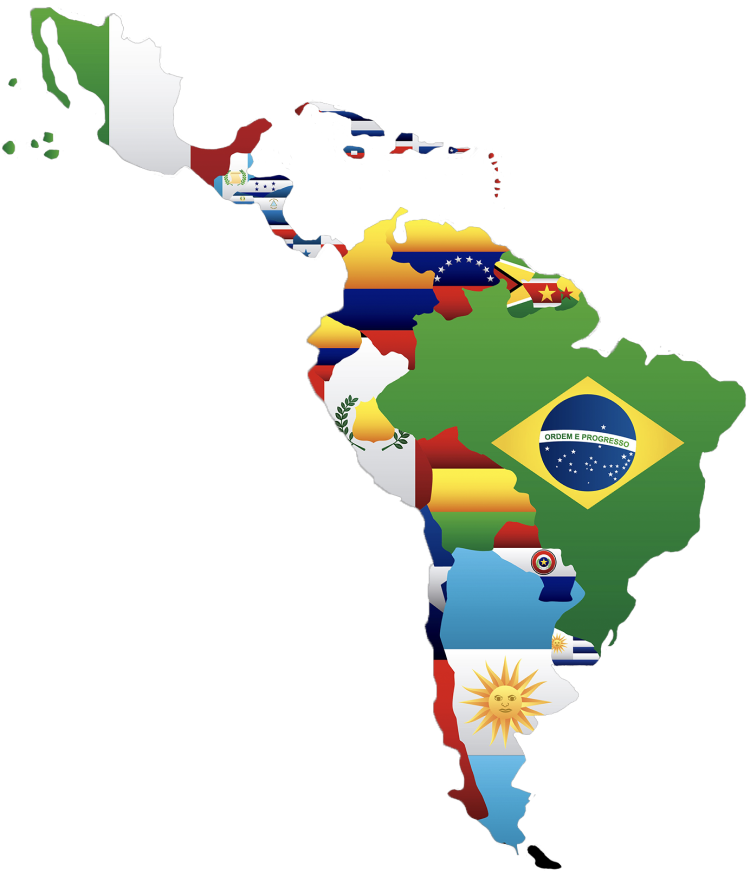
As I often explain to foreign clients, Latin America is not a fixed region on the map – and it doesn’t have an overarching regulatory body like the EU. What countries are in – or out – of “Latin America” varies. Some of my clients put Mexico with North America – which it is – but others consider anything south of the USA to be “Latin America” (my personal position). Given this fluidity and collection of 20-30 sovereign countries and some territories, it’s easy to understand the lack of harmonized technical standards.
In 2024, the Environmental Alliance of America (Spanish acronym “AAA”) was established in Colombia, with the participation of standardization and accreditation entities from several Latin American countries — including Brazil, Colombia, Ecuador, Paraguay, Mexico, and Costa Rica — and with the support of the United Nations Environment Programme (UNEP).
Now, as part of its efforts to develop some regional standards, AAA has opened public consultation for two sustainability criteria: air conditioners and refrigerators. The draft standards are open to international public consultation and comment until November 24.
Link to drafts:
https://alianza-ambiental.org/consulta-publica.
📚 Capacity Building: Courses & Trusted Translations
Navigating evolving chemical regulatory frameworks in Latin America requires clarity, accuracy, and practical know-how.
To support companies and professionals working in this space, we offer:
- 🧭 Specialized courses on “LatAm REACH” frameworks — including details on inventory and registration requirements, prioritization processes, and implementation timelines for CHILE “REACH” and COLOMBIA “REACH”.
- 🌐 Trusted translations of key regulatory texts — including regulations and official instructions guides for registration — translated with precision.
👉 If your organization needs to build internal capacity or stay ahead of regulatory change, these resources can help ensure compliance and reduce costly delays.
All available online from anywhere in the world at AMBIENTELEGAL ACADEMY: https://ambientelegalacademy.teachable.com/p/home
© 2025. All rights reserved. This publication is protected by copyright and monitored by AI-powered content tracking systems. Unauthorized use, reproduction, or distribution is strictly prohibited.lication is protected by copyright and monitored by AI-powered content tracking systems. Unauthorized use, reproduction, or distribution is strictly prohibited.
