
A Turning Point for Chemical Regulation in Latin America
Today, Peru published Supreme Decree Nº 005-2026-MINAM, implementing Legislative Decree Nº 1570 — its comprehensive framework for the management of chemical substances.
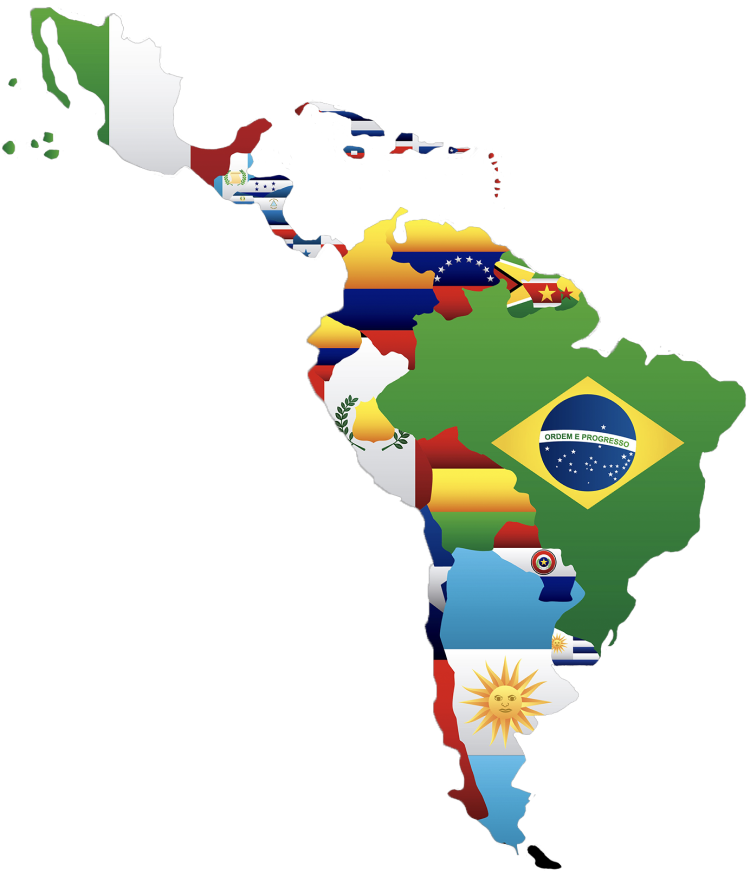
With this publication, Peru becomes the fourth country in Latin America to adopt a REACH-inspired regulatory model, following Chile, Colombia, and Brazil. More importantly, it confirms something that has been building for several years: chemical regulation in the region is no longer evolving gradually. It is accelerating, and it is converging around a common structure.
What Peru has put in place is not a narrow registration system. It is a full lifecycle, risk-based framework that will reshape how chemical substances are managed, reported and ultimately controlled. And the structure set up by this regulation is complex and ambitious. Industry and government both will have significant learning curves to overcome.
The Threshold Question — and Why It Should Not Slow You Down
One of the first questions industry will ask is also the one the regulation does not yet answer: at what volume does the obligation to notify begin?
The regulation is explicit that a threshold will be established, based on annual manufactured or imported quantities, and that it will be defined by subsequent Supreme Decree, with timing expected before the start of notification obligations. It also introduces the possibility that this threshold may evolve over time, becoming more stringent as the system matures.
What it does not say is what that threshold will be.
There will be understandable speculation as to whether Peru will align with the one ton per year threshold used in Chile, Brazil, and the EU, or whether it will take a different approach like Colombia who opted for 100 kilograms. But focusing too heavily on that unknown risks missing the more important point.
The compliance timeline is already fixed. The first notification deadlines begin in September 2028. If the threshold is defined only shortly before those deadlines, companies that wait for that decision before preparing will find themselves with very little time to act.
In practical terms, the window to prepare has already opened.
It is also important to note that the threshold determines when notification and reporting obligations apply, not whether substances are subject to hazard classification and communication requirements more broadly.
A Broad Scope — and Some Subtle Boundaries
The regulation applies to essentially anyone involved in the lifecycle of chemical substances in Peru: manufacturers, importers, distributors, transporters and downstream users. It is intentionally broad, and it is designed that way.
At the same time, the exclusions are extensive and, in some cases, deceptively complex.
At a high level, familiar categories are carved out — pharmaceuticals, agricultural inputs, food and feed, cosmetics and medical devices, among others. These remain governed by their own sector-specific frameworks.
But two areas in particular require closer attention.
The first is the article exemption. Substances contained in articles are exempt, but only on the condition that they are not released under normal conditions of use. That condition will matter, and it will need to be assessed carefully in practice.
The second is natural substances. Minerals, crude oil, natural gas and similar materials are excluded when they exist in nature and have not been chemically modified. However, that exclusion has clear limits. Once chemical modification occurs, or where certain hazardous properties are present — particularly in complex UVCB substances — the assumption of exclusion no longer holds.
The regulation also includes a specific provision addressing hydrocarbons. Annex 3 contains a list of chemical substances associated with hydrocarbon streams, but the regulation is explicit that this list is referential only. It does not create new obligations and does not override existing sectoral regulation under the Ministry of Energy and Mines. At the same time, the list will be updated over time, in coordination between MINAM and MINEM and with reference to international sources. For companies in the hydrocarbons sector, this is best understood as an early signal of regulatory visibility rather than an immediate compliance trigger.
For companies in extractive, energy and materials sectors, this is unlikely to be a simple in-or-out determination. It will require substance-level analysis.
One Regulation, Two Authorities
Like Chile and Colombia, Peru’s new scheme recognizes that more than one agency will be involved in chemical management: environmental and health authorities. In Peru, the interplay of these two agencies is more elaborate and potentially confusing.
Depending on the substance, responsibility sits either with the Ministry of Health (MINSA) or the Ministry of Environment (MINAM). For substances already subject to sanitary authorization – like cleaners – classification, labeling and SDS obligations are handled through MINSA’s existing framework.
For all other substances above the threshold, the competent authority is MINAM, and notification is made through its own system prior to commercialization.
This division is not always immediately obvious from a first reading of the regulation. The text frequently refers simply to the “competent authority,” requiring companies to interpret multiple provisions together to determine where they fall.
It is one of the areas where early clarity is essential. Misidentifying your authority is not a theoretical risk. It has direct compliance implications.
GHS and REACH, Combined
Peru has taken an approach that will be familiar to those who have followed Chile’s regulatory development: it has combined a REACH-style notification framework with full implementation of the Globally Harmonized System (GHS) in a single instrument.
This has practical advantages. Classification, labeling and safety data sheet requirements are not scattered across multiple regulations. Instead, they are integrated.
The system is based on the sixth revised edition of GHS (2015), and it allows companies to reference existing classifications from jurisdictions such as the EU, the United States, Canada, the United Kingdom and Japan. That alignment should reduce duplication of effort.
At the same time, it does not remove the need for a Peru-specific review. Language requirements, formatting rules and certain technical details mean that compliance cannot simply be assumed on the basis of another market.
Note: GHS obligations are not limited to substances above the notification threshold. From 2032 onward, manufacturers and importers of substances below the threshold are also required to classify, label and prepare safety data sheets in accordance with the regulation. In other words, the threshold determines the scope of notification and reporting, but not whether hazard communication obligations apply. Over time, the system is designed so that all substances placed on the market are brought within a consistent classification and communication framework.
Annexes the Regulation
The regulation is supported by four technical annexes that underpin its implementation framework:
- Annex 1 – Codification of Hazard Statements Establishes the standardized coding system for hazard statements in line with GHS.
- Annex 2 – Codification of Precautionary Statements Provides the standardized coding for precautionary statements to be used in labeling and safety data sheets.
- Annex 3 – List of Anticipated Hazard Classifications for Chemical Substances (LCA) Contains the anticipated classification list that serves as the baseline reference for hazard classification.
- Annex 4 – Reference countries Identifies the jurisdictions whose classifications and data may be used as reference sources under the regulation.
The LCA: A Starting Point, Not an Endpoint
The Listado de Clasificación Anticipada — the LCA — is best understood as Peru’s minimum harmonized classification list.
The LCA serves as the baseline reference that companies are expected to take into account. In that sense, it functions similarly to the EU’s harmonized classification system or Chile’s minimum classification list adopted in Resolution 777/2021 (itself a cut and paste of a version of CLP Annex 6).
But the analogy only goes so far.
The regulation treats the LCA as a baseline reference rather than a complete classification system. Because classification must be carried out in accordance with GHS and available hazard data, manufacturers and importers remain responsible for ensuring their classification reflects all relevant information, including any data indicating a more severe hazard profile.
Its role is therefore foundational, not definitive. It also carries a structural consequence that companies should not overlook — where a substance sits in relation to the LCA directly determines which notification deadline applies. Substances already on the LCA face the earliest deadline of September 2028. That deadline is close enough that the LCA should be one of the first things companies check.
Two Obligations, Often Confused
One of the most important distinctions in the regulation is also one of the easiest to misunderstand.
Notification and RENASQ reporting are separate obligations.
Notification is about communicating hazard information — classification, labeling and SDS — to the competent authority before a substance is placed on the market. It applies broadly, including to substances regardless of hazard classification once above the threshold. (And, from 2032 onward, substances below the threshold are also subject to classification, labeling and SDS obligations.)
RENASQ, by contrast, is an annual reporting system focused on quantities of hazardous substances. It operates on a calendar-year basis and is limited in scope to substances with hazardous classifications.
The two systems are linked, but they are not interchangeable. Notification comes first. Reporting follows.
The notification timeline runs through a staggered adaptation period. Substances whose classification matches the LCA must be notified by September 2028. Substances with a different classification must be notified by September 2029. Hazardous substances not found in the LCA must be notified by September 2030. Non-hazardous substances have until September 2031. RENASQ quantity reporting — for hazardous substances only — then follows one year behind each of those deadlines, beginning in 2029 for LCA-classified substances and running through 2031. A voluntary trial period for the RENASQ platform runs through 2028, giving industry an early opportunity to test the system before mandatory reporting begins.
There is one further dimension to RENASQ that is worth understanding early. The registry will not be populated by industry alone. For substances that already go through a sanitary registration process — industrial chemicals, domestic use substances and public health products registered through MINSA — the government will populate RENASQ automatically through interoperability between existing registries. Industry does not separately report those substances. For all other covered substances, manufacturers and importers report directly. Knowing which category your substances fall into will meaningfully shape your compliance program.
In practice, confusing the two could lead companies to believe they have met their obligations when they have only completed part of them.
From Inventory to Control
Perhaps the most important aspect of the regulation is what comes after notification.
The system is designed to build, over time, a national inventory of chemical substances — expected to be published around 2031 following completion of the notification phase. That inventory is not an endpoint. It is the foundation for what follows.
From it, Peru will begin to prioritize substances of concern, based on hazard, exposure, volume and other criteria. Those prioritized substances will then be subject to risk assessment — and that obligation falls on industry like it does in Chile and Colombia (but not Brazil).
Manufacturers and importers will be required to prepare and submit risk assessments within defined timelines. For new substances, this requirement applies before commercialization.
Ultimately, those assessments will inform risk management decisions, which may range from additional communication requirements to restrictions or prohibitions.
In other words, this is not simply a reporting regime. It is the front end of a control system.
The Role of the REE
The regulation also introduces the figure of the Foreign Representative (Representante Exclusivo del Exterior or REE).
This is based on Colombia’s REE which is a mechanism for foreign manufacturers to submit confidential business information directly to the authorities, without disclosing it to their local importer. The importer remains responsible for compliance, but does not have access to protected data.
It is, in effect, a targeted solution to a specific problem — not a transfer of regulatory responsibility.
And most importantly, it is NOT an “Only Representative” option. As in Colombia and Chile, the foreign manufacturer does not have a way to control registration of their substances sold into Peru.
What Matters Now
The regulation will enter into force approximately six months after publication.
That may appear to leave time. In reality, the key milestones are already close enough that preparation cannot be deferred.
The first step is understanding scope — at the level of individual substances, not product categories. From there, determining the competent authority, mapping substances against the LCA, and reviewing classification, labeling and safety data sheets against Peruvian requirements will all take time.
For many companies, the most significant challenge will not be a single obligation, but the coordination of several — across functions, systems and, in some cases, jurisdictions.
A Broader System Than It First Appears
Even this overview captures only part of what the regulation establishes.
It includes detailed provisions on workplace safety, accident prevention, waste management and enforcement, supported by a structured inspection and sanctions regime. The potential penalties for non-compliance are significant.
Taken together, these elements make clear that Peru has not introduced a limited regulatory adjustment. It has built a comprehensive national system for managing chemical substances across their lifecycle.
Final Take
Peru’s entry into the group of REACH-inspired jurisdictions is not an isolated development. It’s part of a broader regional shift toward structured, risk-based chemical regulation.
For companies operating in Latin America, the implication is straightforward.
The question is no longer whether this model will apply. It is how quickly organizations can align with it — and how prepared they will be when the deadlines arrive. And keep in mind that for Colombia the deadlines have come and gone – and for Chile substances in mixtures are pending registration in 2027 (industrial) and 2029 (non-industrial).
© 2026. All rights reserved. This publication is protected by copyright and monitored by AI-powered content tracking systems. Unauthorized use, reproduction, or distribution is strictly prohibited.
