Latin America: Critical Minerals Update
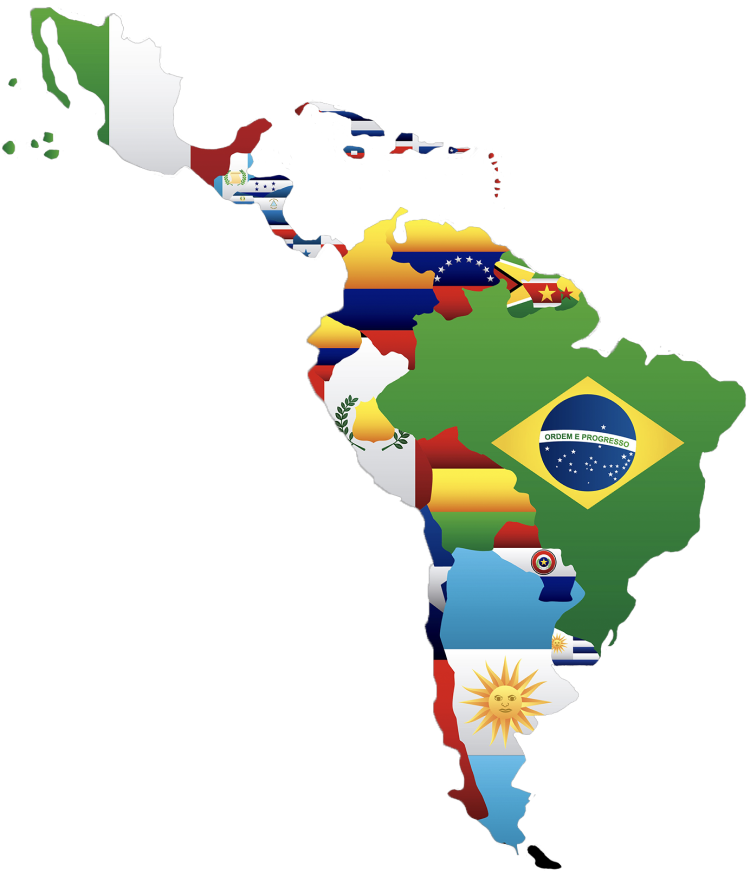
A regional picture is coming into focus. Latin America’s major mining nations are each moving on critical minerals — through legislation, national strategy, and international diplomacy — and the pace is accelerating.
- Chile: National Critical Minerals Strategy Launched
Earlier this year, Chile formally launched its National Critical Minerals Strategy (Spanish acronym “EMC”). The strategy identifies 14 critical minerals feasible for development in Chile: copper, lithium, molybdenum, rhenium, cobalt, rare earth elements, antimony, selenium, tellurium, gold, silver, iron, boron, and iodine. It is structured around five strategic pillars: production and diversification; responsible mining; value-added development opportunities; international insertion and minerals diplomacy; and enabling capabilities. That fourth pillar — minerals diplomacy — is worth noting explicitly. Chile is framing its mineral resources as a foreign policy instrument, not merely an economic one. The goal is not simply to mine more, but to consolidate Chile’s position as a reliable partner and responsible producer in global clean energy supply chains, capturing value-added processing and attracting responsible investment on Chilean terms.
Link to Strategy: https://www.minmineria.cl/estrategiademineralescriticos/doctos_descarga/20260130-Estrategia-Minerales-Criticos.pdf
- Brazil: States Move Ahead of the National Government
At the national level, Brazil has signaled its intention to treat critical minerals as a matter of national sovereignty, with value-added processing kept in-country. But it is at the state level where concrete action has already materialized. As we reported late last year, the mining state of Goiás enacted Law 23.597 creating both a State Fund for the Development of Critical Minerals and a State Authority on Critical Minerals — moving ahead of the federal government.
Goiás defines critical minerals broadly — rare earths and their constituent elements including neodymium, praseodymium, cerium, lanthanum, and dysprosium; niobium; nickel; copper; titanium; phosphate; soil remineralizers; and agrominerals. The inclusion of agrominerals — natural mineral substances applied to soil for nutrient replacement, acidity correction, and atmospheric CO₂ capture through accelerated weathering — reflects Brazil’s unique positioning at the intersection of critical minerals and agricultural productivity.
Brazil’s broader rare earth endowment is strategically significant. As we have reported previously, Brazil holds substantial rare earth reserves essential to AI infrastructure, data centers, clean energy technology, and electric mobility — resources that companies like Apple have elevated to dedicated global supply management roles.
- Peru: Engaging on the International Stage
Now, we note that Peru is approaching the critical minerals moment differently — through multilateral engagement. On April 28, 2026, Peru’s Minister of Environment led the country’s delegation at the OECD Forum on Critical Minerals in Istanbul, focused on unlocking investment and growth through strategic partnerships.
As the world’s third largest copper producer — holding approximately 12% of global production and reserves — Peru’s presence at an OECD-convened forum signals active positioning as a strategic actor in global critical minerals diplomacy. But the substance of Peru’s intervention was not about volume. It was about terms: value-added processing, high environmental and social standards, community participation, and traceability. The shift from raw material exporter to industrial partner is Peru’s explicit ambition.
- The Regional Logic
Three countries, three approaches — but a single underlying logic. Latin America’s critical minerals will not simply flow out of the ground on the terms of the buyer. Brazil is asserting sovereignty and capturing value domestically. Chile has built a presidential-level strategy with minerals diplomacy as an explicit pillar. Peru is engaging multilaterally to set the terms of investment. The regulatory and policy frameworks being built now will define the rules of engagement in these supply chains for decades.
For companies in mining, technology supply chains, battery materials, and clean energy equipment, the direction is clear: due diligence requirements on mineral sourcing from Latin America are tightening, value-added processing expectations are rising, and the policy environment is becoming more — not less — complex. Getting ahead of that curve means engaging with these frameworks now, not when they are fully enacted.
Chile: WEEE and Batteries EPR Decree Clears Final Hurdle
Chile’s long-awaited decree establishing collection and recovery targets for waste electrical and electronic equipment and batteries under the country’s Extended Producer Responsibility Law (Law 20.920) has cleared its final administrative hurdle. On April 20, 2026, the Office of the Comptroller General (Contraloría General de la República) issued its approval (toma de razón) of the decree. Publication in the Official Gazette is expected within days, at which point the clock starts for producers.
The decree has been over five years in development. Its complexity reflects the breadth of products covered — consumer electronics, photovoltaic panels, temperature exchange equipment, and batteries — each with its own technical specifications.
- Reporting Obligations Already Apply
Companies should note that even before the target-setting decree takes effect, producers of electrical and electronic equipment and batteries are already subject to annual reporting obligations for products placed on the Chilean market. Last year that obligation was found in Resolution 4771/2025. Under it, producers and importers of listed priority products were required to report quantities introduced into the national market during 2024 — expressed in tons, units, or cubic meters as appropriate — via the RETC platform (Chile’s pollutant release and transfer registry platform). The deadline for that submission was September 15, 2025.
For purposes of that reporting obligation, electrical and electronic equipment is broadly defined as all equipment and components that require electric current or electromagnetic fields to function properly, including equipment necessary to generate, transmit, and measure such currents and fields, designed for use at rated voltages not exceeding 1,000 volts AC or 1,500 volts DC. Batteries are defined as any source of electrical energy obtained by direct conversion of chemical energy, consisting of one or more elements and weighing less than 5 kilograms.
If your company places products within these definitions on the Chilean market and has not been tracking this reporting obligation, that gap needs to be addressed now — independently of the target compliance timeline below.
- What Happens Next
Once published, producers have two years before collection and recovery targets become mandatory. That window is not a grace period — it is a structured implementation timeline with multiple mandatory steps:
- Producers must join or establish a collective or individual Management System
- Collective systems must obtain authorization from Chile’s Competition Tribunal (Spanish acronym “TDLC”) — a process that takes a minimum of six months.
- Following TDLC approval, a Management Plan must be submitted to and approved by the Ministry of Environment.
- Only after that second approval can technical implementation begin in earnest.
Two collective Management Systems are already in formation — TRAEE, under the Santiago Chamber of Commerce, and WEE Chile, managed by New Hope Ecotech. Producers may also establish individual systems.
- What It Means for Companies
For producers placing electrical and electronic equipment or batteries on the Chilean market for the first time, the decree’s publication triggers immediate obligations. The two-year runway sounds generous — but the TDLC authorization process alone can consume a significant portion of it, and the technical plan that follows is not straightforward.
Companies in the electronics, appliances, solar, and battery sectors that have been waiting for regulatory certainty before making compliance investments now have it. The strategic organization phase starts now. The technical implementation phase follows in 2027.
Mexico: Circular Economy Law Implementation Moving — Regulation Due July 2026
As we reported, Mexico enacted its General Circular Economy Law (Spanish acronym “LGEC”) on January 19, 2026. The implementing Regulation is due within 180 days — by approximately mid-July 2026. With that deadline approaching, the federal government is moving visibly on implementation.
On April 24, 2026, Secretary of Environment co-chaired the ordinary meeting of the National Association of State Environmental Authorities (Spanish acronym “ANAAE”) alongside the Governor of Quintana Roo. The meeting’s central purpose: harmonizing state-level regulatory frameworks with the LGEC and its forthcoming Regulation. That federal-state coordination machinery is now actively running.
- What does the Law Require
The LGEC establishes a nationwide framework to extend product life cycles, reduce waste, and promote reuse, repair, recycling, and valorization of materials. For industry, the core obligations are:
- Circular design: Producers must design and develop products using circular design principles, where environmentally, technically, and economically feasible.
- Extended Producer Responsibility (EPR): Producers and importers are responsible for organizing, promoting, and financing circular economy systems for their products, including waste recovery and reintegration of secondary raw materials into value chains.
- Mandatory registration: Producers, importers, or their coordinating organizations must register a Circular Management Plan in the National Circular Economy Registry, covering the full product life cycle.
- Two compliance pathways: Direct compliance — producers implement circularity measures themselves — or indirect compliance via third parties through sustainable value-chain agreements or environmental compensation.
- Environmental compensation as fallback: When direct or indirect compliance is not feasible, EPR obligations may be met through proportional environmental compensation, subject to regulatory approval, including ecosystem restoration, reforestation, emissions reductions, and certified instruments such as green bonds or carbon credits.
- What is Coming Next
The Regulation — due mid-July 2026 — will define how these obligations work in practice, including procedures, eligibility criteria, and supervision mechanisms. Following the Regulation, the government has a further 180 days to publish the National Circular Economy Program 2026–2030, which will identify priority sectors, product categories, and sector-specific EPR implementation details, including for plastics.
The ANAAE meeting also surfaced a new infrastructure concept: Circular Economy Poles (in Spanish Polos de Economía Circular) — industrial zones designed to convert waste streams into productive inputs.
- Interplay with Existing Obligations
Mexico is not entirely new to EPR. Existing Mexican Official Standards (Spanish acronym “NOMs”) already cover special management wastes including electronics and batteries. The LGEC calls for modification of those existing NOMs, meaning companies need to track a changing compliance landscape during the transition.
The Regulation is due in approximately ten weeks. Companies selling products in Mexico should be tracking it closely.
Mexico: New Industrial Property Regulation Published
Last week we reported on Mexico’s new 10-year data protection provision for new agrochemical active ingredients under the PLAFEST Regulation — a change that is fundamentally an intellectual property protection measure. The procedural framework that governs how that protection — and all industrial property rights in Mexico — is administered and enforced just got updated.
On April 28, 2026, Mexico published a new Regulation of the Federal Law for the Protection of Industrial Property, replacing the prior implementing regulation. For companies holding patents, trade secrets, proprietary formulations, or test data for products registered or sold in Mexico — across chemicals, agrochemicals, pharmaceuticals, and beyond — this is the rulebook that governs enforcement of those rights before the Mexican Institute of Industrial Property (IMPI).
A detailed review of what changed from the prior regulation is warranted for any company with active IP in Mexico.
Link to Regulation:
https://sidof.segob.gob.mx/notas/5786237
Brazil Updates Authorized Food Additives and Processing Aids
ANVISA published Normative Instruction 432 (Portuguese acronym “IN 432”) on April 2, 2026, amending IN 211/2023, Brazil’s master framework governing authorized food additives and processing aids. The regulation entered into force upon publication, with a 36-month labeling transition period for two specific categories.
- Exclusions
Two authorizations have been removed: potassium tartrates (INS 336) as an acidity regulator in liquid table sweeteners, and tocopherols (INS 307) as an antioxidant in soy-based non-alcoholic beverages. Products already manufactured may be sold until end of shelf life, provided they are produced within the 36-month adaptation window.
- Revised Limits and Conditions of Use
The most broad impact changes involve tocopherols (INS 307a/b/c), with differentiated limits across vegetable oils, olive oil, and significantly higher limits — up to 6,000 mg/kg — for fish and algae oils and related liquid supplements. Sulfite permissions expand for cashew juice and pulp products. Tartaric acid and tartrate authorizations extend across confectionery, bakery, soup, and supplement categories, generally at 5,000 mg/kg expressed as tartaric acid equivalents, and up to 20,000 mg/kg for effervescent fillings.
- New Additive Authorizations
The most notable new addition is glycolipids (INS 246), a preservative category not previously authorized under IN 211, now permitted in fruit juices and pulps (100 mg/kg), liquid food supplements, alcohol-free beer, and certain non-alcoholic aperitifs (50 mg/kg each). Additional new authorizations include lecithin in UHT dairy beverages, smoke flavors in preserved eggs, and phosphate-based emulsifiers and anti-caking agents for powdered oil ingredients used in infant formula.
- New Processing Aids
Perlite is now authorized as a clarification and filtration agent for refined vegetable oils. Transglutaminases are authorized for processed meat products, with limits ranging from 8,000 mg/kg for fresh and cooked products to 10,000 mg/kg for dried products such as copa and embutidos.
Companies formulating or marketing products across oils, juices, confectionery, bakery, soups, supplements, dairy, infant formula, beer, and processed meats in Brazil should review their additive declarations against the updated IN 211 annex.
Link to Regulation:
https://anvisalegis.datalegis.net/action/ActionDatalegis.php?acao=detalharAto&tipo=INM&numeroAto=00000432&seqAto=000&valorAno=2026&orgao=DC/ANVISA/MS&nomeTitulo=codigos&desItem=&desItemFim=&cod_modulo=310&cod_menu=9434b=0
© 2026. All rights reserved. This publication is protected by copyright and monitored by AI-powered content tracking systems. Unauthorized use, reproduction, or distribution is strictly prohibited.
