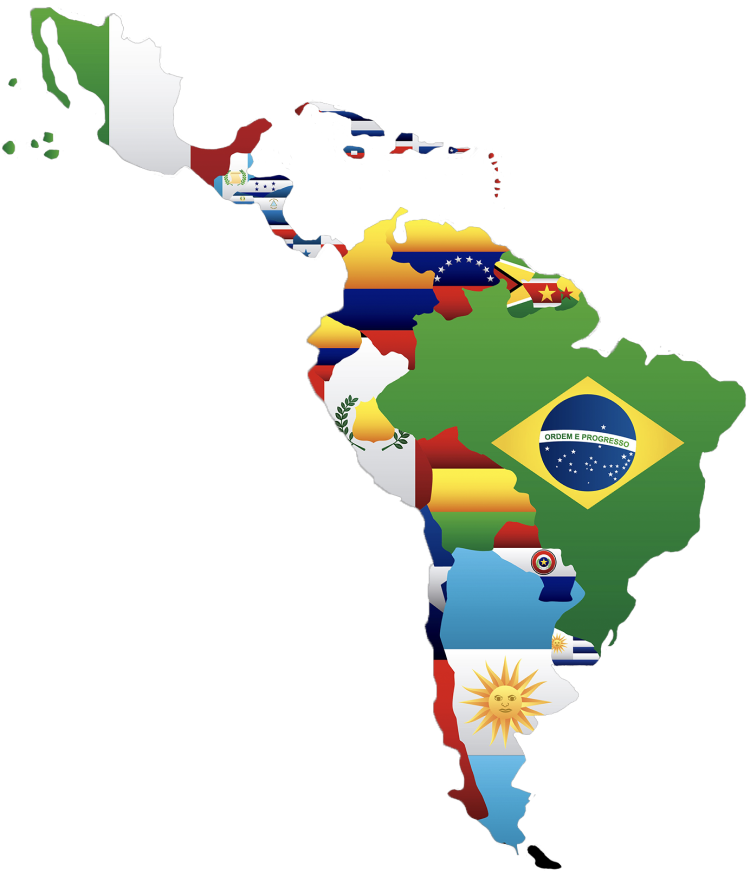

Brazil REACH isn’t really about registration timelines. That’s the distraction.
The real decision most multinationals haven’t faced yet is structural:
👉 Will we let each Brazilian importer handle compliance separately — or centralize it?
This single choice determines:
- who controls the master substance data
- consistency (or chaos) across customers
- exposure to an individual importer’s failure or audit
- overall coordination cost and internal bandwidth
In every other REACH-style regime, the companies that addressed this early built the most efficient, lowest-risk programs. Brazil will be no different.
The catch: this decision needs to be made before the registration window opens.
What is your organization leaning toward — decentralized importers or a centralized model (OR or otherwise)?

Chile: Mandatory EPR for Lithium-Ion and Lead-Acid Batteries Impacts Many Products
As part of its continued rollout of specific target-setting decrees for the original six priority products under its 2016 EPR Law, Chile has now posted for public comment the detailed rules around take-back and management of lead-acid and large lithium-ion batteries. While the proposal is framed around batteries, its real impact reaches much further across multiple industries.
The regulation applies to batteries ≥5 kg including lithium-ion systems (and all lead-acid batteries). Crucially, the draft makes clear that batteries are covered even when they are embedded in a vehicle, apparatus, or machinery.
At the same time, responsibility sits with the “producer” — meaning whoever introduces the battery into the Chilean market, including via import.
Why this matters
This creates an important dynamic:
The regulation targets batteries — but the obligations fall on companies placing them on the market, including when they are inside products.
In practice, this means many companies that do not consider themselves “battery companies” may still be in scope. This standard should be of note to companies manufacturing or importing any product incorporating large batteries, including:
• Electric vehicles (cars, buses, trucks) and electric mobility (e-scooters, forklifts)
• Energy storage systems (residential, commercial, grid-scale)
• Industrial equipment (construction machinery, cleaning equipment, heavy tools)
• Backup power systems (UPS, telecom and data center batteries)
Producer/Importer Obligations
The draft introduces progressive collection and recycling targets, reaching up to:
- 90% for lead-acid batteries
- 50% for lithium-ion batteries
Producers must comply through authorized management systems (individual or collective), responsible for collection, storage, and recycling.
Operational impact goes beyond targets
The proposal establishes a full compliance framework, including:
- Free take-back obligations for large retailers
- Nationwide collection infrastructure rollout
- Mandatory collection from automotive workshops
- Labeling requirements for lithium-ion batteries
- Annual reporting, audits, and financial guarantees
It also links compliance to import processes, requiring producers to declare at customs whether they participate in an approved system.
What companies should be thinking about now
For companies exporting to or operating in Chile, this is a classic EPR shift:
- Responsibility moves upstream to producers and importers
- Compliance becomes operational (logistics, systems, reporting)
- Battery obligations attach even when embedded in products
What’s next
The Draft is open for public comment until April 9, 2026. If adopted, the decree will enter into force upon publication, with most obligations applying 18 months later.
📌Key Takeaway:
Chile is not just regulating batteries — it is effectively regulating the companies that place battery-powered products on the market.
For many sectors, this will become a market access requirement, not just an environmental compliance exercise.
Link to Notice:
https://www.diariooficial.interior.gob.cl/publicaciones/2026/02/25/44385/01/2773908.pdf
Colombia plastic tax: new guidance clarifies what importers need to prove
DIAN Resolution 0005 of 2026 (covered in an earlier edition) operationalized Colombia’s tax on single-use plastics. Now, the Ministry of Environment and the DIAN have issued additional guidance to clarify how the rules should be applied in practice – including how companies justify whether the tax even applies to their operations.
Officially titled the “Environmental and tax guidelines for importing single-use plastics into Colombia”, the document provides:
- Clarified definitions (what qualifies as packaging, SUP plastics, etc.)
- Detailed exclusions under the law
- Expectations on supporting documentation importers must retain
Why this matters for companies
If the Resolution made the tax operational, this guidance makes compliance defensible.
The biggest impact is around evidence and classification:
👉 It is no longer enough to determine internally that a product is exempt 👉 Companies must be able to demonstrate and document why it is exempt
In practice, this means:
- Stronger product-level classification of packaging materials
- Clear justification for exclusions claimed at import
- Alignment between technical (sustainability) and tax positions
- Readiness for audit and verification by DIAN
Where companies may feel the pressure
The guidance highlights areas where errors are most likely:
- Misclassification of packaging vs. non-packaging elements
- Incorrect application of exclusions
- Lack of documentation to support claims
For importers, this creates a shift:
Compliance is no longer just about paying the tax but about proving when they don’t need to.
📌Key Takeaway:
The Resolution made the plastic tax enforceable, but the new Guidance makes it auditable. For companies, the priority now is not just calculation—but classification, documentation, and defensibility at import.
Link to Guidance:
Brazil RoHS is coming — but the real impact isn’t chemistry
Brazil’s proposed RoHS framework under CONAMA is getting attention—but for companies already complying with EU RoHS, the biggest takeaway is this:
The challenge is not substance restrictions — it’s local compliance.
What’s familiar
The proposal mirrors EU RoHS almost exactly:
- Same restricted substances (lead, mercury, cadmium, Cr⁶⁺, PBB/PBDE, phthalates)
- Same concentration limits
For most companies, product design and materials are already compliant.
Where the real impact sits
Brazil is layering market access obligations on top of RoHS that go beyond the EU model:
• Mandatory product registration in a national database
• Brazil-specific declaration of conformity (not just EU DoC)
• Local legal responsibility — importers/distributors may be treated as manufacturers
• Labeling and traceability requirements (potentially including digital access)
This is where companies will feel the burden—not in engineering, but in compliance infrastructure.
What changes in practice
Even if you are fully EU RoHS compliant:
- You will need a Brazil-based responsible entity
- You must register products before placing them on the market
- You need localized documentation and declarations
- You should be prepared for inspection and product testing by authorities
📌Key Takeaway:
Brazil is not reinventing RoHS — it is operationalizing it locally.
You may be technically compliant already, but you won’t be market-ready without Brazil-specific compliance processes to access the market.
The gap won’t be chemistry, but the registration, accountability, and execution in Brazil it will require.
Link to current Draft Brazil RoHS:
https://conama.mma.gov.br/index.php?option=com_sisconama&task=documento.download&id=27033
Chile: Draft Product Classification Guidance Raises the Bar Across Regulated Products
Chile’s ISP posted a draft “Guide to considerations for the correct classification of products subject to health control” for public comment. While not new law, the document reinforces how existing regulations must be applied across the product lifecycle (registration, import, manufacturing, distribution, and advertising).
🔎 Scope: Which product categories are impacted?
The guidance applies broadly to all ISP-regulated product types, including:
• Pharmaceuticals / medicines
• Cosmetics
• Medical devices
• Pesticides for sanitary and domestic use
• Disinfectants
• Foods (including supplements and special nutritional products)
The Guide sets out handy tables comparing the product category definitions against those used in the EU, USA, UK, Japan, China, and by the WHO.
It also specifically addresses claims and advertising for each category.
⚠️ Why now?
According to the draft Guide, incorrect classification is creating real regulatory and public health risks. The ISP highlights situations where products are: •
Marketed under the wrong category (e.g., cosmetics or supplements that should be medicines or devices)
• Commercialized without proper registration, safety, or efficacy support
• Promoted in ways that do not comply with applicable regulations
💡 Why companies should care
This guidance makes clear that classification is not a formality — it determines the entire regulatory framework applicable to a product, including:
• Registration and approval requirements •
Manufacturing and import controls
• Distribution conditions
• Advertising and claims limitations
Misclassification can trigger reclassification, withdrawal from the market until properly registered, and even incur sanctions and enforcement actions.
📌 Key Takeaway:
The ISP is signaling stricter expectations around how companies classify and position their products. For companies operating in Chile, especially with borderline or multi-category products, ensuring alignment between composition, intended use, and claims is critical to maintaining compliance and market access.
Public comment period is open until March 23, 2026.
Link to Draft:
Instituto de Salud Pública de Chile
Mexico: Health and Customs Agencies Coordinating for Tighter Border Controls
Mexico’s health agency, COFEPRIS, and customs authorities, ANAM, have signed a new coordination agreement to tighten control over regulated goods in international trade — while also aiming to streamline processes. These changes come as Mexico just implemented foundational reforms to its customs processes through changes to the Customs Law and its Regulation that are impacting companies exporting both raw materials and finished goods to the country.
🔎 What’s changing? This agreement formalizes strategic, real-time information sharing between health and customs authorities. The goal is to coordinate inspection and control protocols for regulated products, updated operational mechanisms at borders and entry points.
⚠️ Impact on Exporters to Mexico
This move signals closer alignment between regulatory approval and customs clearance. Companies should expect higher scrutiny at the border for products subject to sanitary regulation. Now, greater consistency will be required between what is approved by COFEPRIS and what is allowed through customs with fewer gaps to “navigate” between regulatory and import processes. This change will result in faster clearance for compliant products, but quicker holds or rejections for non-compliant ones.
📦 Who is most impacted? Companies exporting: • Pharmaceuticals and biologics • Medical devices • Cosmetics • Food products and food supplements • Other health-regulated goods
For exporters, this means:
👉 Regulatory, labeling, and documentation strategies must be fully aligned before shipment
👉 Any inconsistencies between filings and physical goods are more likely to be flagged
👉 Compliance readiness will directly impact speed to market
📌Key Takeaway:
Mexico is moving toward a more integrated “single control” model at the border.
Brazil Expands Corporate Responsibility on Forced Labor Across Supply Chains
Brazil has formally incorporated the ILO Protocol to Convention No. 29 into its legal framework, marking a clear shift in how forced labor is regulated and enforced.
While the country already prohibited forced labor, the new framework expands expectations—particularly around prevention, supply chain oversight, and remediation. It will directly influence labor inspections, enforcement actions, and how corporate responsibility is assessed in practice.
The key change is that companies are now expected to actively prevent forced labor risks, not just avoid violations. This change requires a clearer understanding of where risks may arise—especially in operations involving migrant, temporary, or outsourced workers.
The framework introduces an explicit expectation of due diligence. Companies are expected to assess suppliers, contractors, and labor providers, with heightened scrutiny in higher-risk sectors such as agriculture, construction, mining, and textiles.
This aligns Brazil more closely with global standards and best practices.
Authorities are expected to increase inspections across sectors, including subcontracted and informal labor. For companies, this means a higher likelihood of audits, stricter scrutiny, and greater exposure to penalties and public enforcement measures.
A notable shift is the focus on remediation. If forced labor is identified, companies may be expected to provide compensation and corrective measures for affected workers—not simply terminate relationships.
The framework also highlights risks linked to abusive or misleading recruitment practices. Companies should pay close attention to third-party recruiters and ensure that practices such as recruitment fees, document retention, or deceptive contracts are not occurring.
📌Key Takeaway:
For companies, compliance is no longer limited to internal operations—it requires demonstrating that forced labor risks are being actively identified, managed, and prevented across the entire value chain. More than ever, a company must know its supply chain – and have controls in place.
Link to Decree:
https://www.in.gov.br/web/dou/-/decreto-n-12.857-de-24-de-fevereiro-de-2026-688668798
Argentina: E-commerce platform becomes compliance gatekeeper
Online sales are nothing new in Latin America. In fact, the region is home to Mercado Libre, the region’s largest e-commerce and fintech platform, operating in 18 countries and serving tens of millions of users with billions in annual transactions. When Mercado Libre teams up with regulators, companies need to take note.
Argentina’s food safety authority, SENASA, has worked with Mercado Libre since 2019 to detect and remove products that violate sanitary regulations. The government recently published results: listings of high-risk, non-compliant products have dropped to just 5% as of December 2025.
For companies, the implication is clear. Compliance is no longer limited to interactions with regulators. Platforms themselves are becoming active filters, meaning non-compliant products may be removed—or never gain visibility—before reaching consumers.
📌Key Takeaway:
Regulatory enforcement is moving upstream into digital marketplaces. If your product doesn’t meet requirements, the risk is no longer just penalties. You may lose access to the online market altogether.
Chile & Colombia REACH
If your company sells chemicals into Latin America, this question always comes up:“Do we need to do anything for Chile or Colombia REACH?”
The problem isn’t the answer — it’s the time it takes to figure out what the question even means.
Most teams end up digging through scattered guidance, PDFs, and half-explained summaries just to understand how these systems work.
So I built something simpler:
Step-by-step explanations (videos + downloadable report) that walk you through Chile and Colombia REACH from start to finish — so you can understand the full picture in one sitting. No piecing it together. No guesswork.
➡️ Chile REACH course:https://lnkd.in/gfyjGWxJ
➡️ Colombia REACH course: https://lnkd.in/gAqyNNHbRG3
© 2026. All rights reserved. This publication is protected by copyright and monitored by AI-powered content tracking systems. Unauthorized use, reproduction, or distribution is strictly prohibited.
