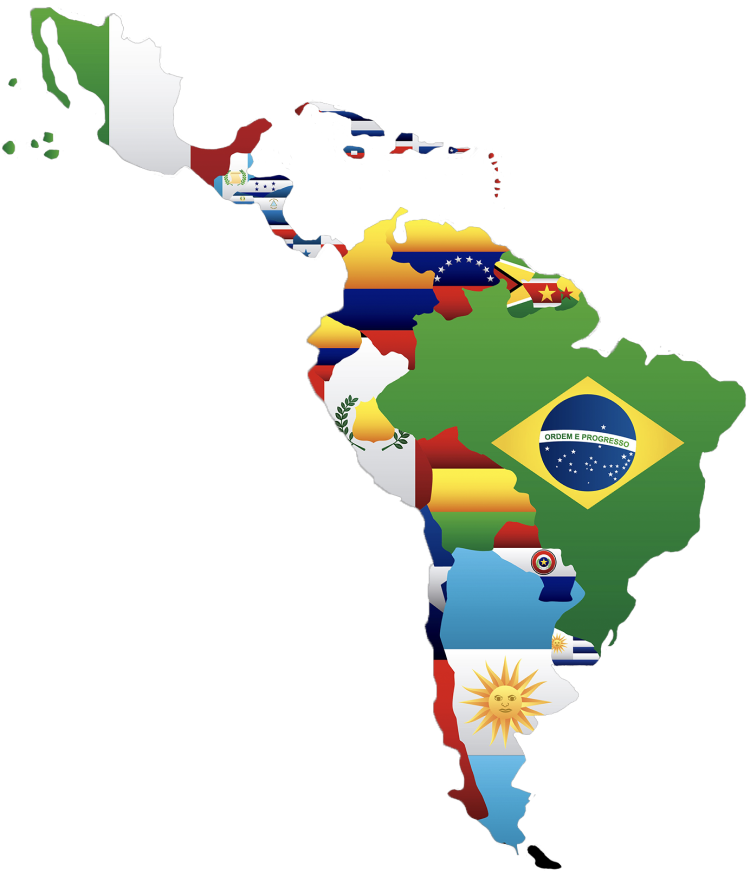

🌎 GHS in Latin America: Where are we now? Where are we headed?
Latin America has embraced the Globally Harmonized System (GHS)—but adoption is anything but harmonized:
⚡ Different revisions across countries
⚡ Different scopes (workplace-only vs. transport, agriculture, consumer)
⚡ And now… consumer product labeling is emerging as the next big wave
📊 Our new infographic shows:
✅Who’s already adopted GHS (and which version)
🚀Which countries are likely to move next
We’re also preparing a course on GHS in Latin America to make sense of this complex landscape.
👉 What do you most want to learn? Regulatory updates? Practical labeling tips? Consumer product trends?
Let us know your thoughts — and check the infographic for a quick tour of GHS across the region.
Mexico Bans 35 Pesticides
For the first time in almost 35 years, Mexico banned 35 existing pesticides. The decree bans their production, formulation, manufacture, including the synthesis of the active ingredient, procurement, processing, preparation, preservation, mixing, conditioning, packaging, handling, storage, transportation, marketing, distribution, use, application, and final disposal within the national territory. The pesticides referred to are identified in the list by their CAS (Chemical Abstract Service) registration number (and their common name is indicated for reference purposes only).
The decree is the joint work of the Secretaries of Health, Environment, Agriculture, and Economy. The agencies committed to continue their work to identify and analyze other substances to ban in the next steps of the national strategy, following guidance from the WHO and FAO and hewing to their Stockholm and Rotterdam Conventions obligations. One of the goals is to phased out these older products to make way for newer, safer alternatives for Mexican agriculture.
Some critics argued that the efforts were still too tame. They note that Mexico still uses many older products no longer in use in other countries and pointed in particular to ethyl chlorpyrifos, glyphosate, and fipronil.
Link to Decree with List:
Geopolitical News: New Alliances
As the world order goes through tectonic changes, the speed of free trade agreements (see earlier editions) and new partnerships increases. One very interesting development to note is the rise of subnational governments – states or provinces – creating trade agreements or memorandums of understanding on specific issues with other nations. Last week, Brazil’s federal government and California’s state government announced the signature of a Memorandum of Understanding between the two entities to work on climate change together.
Key Take-Away: Companies need to be aware of the emerging alliances in this time of change.
Link to MOU:
Cosmetics: Concern over CMR Ingredients in Nail Polish Spreads to Latin America
Regulators in Latin America are very tuned into – and responsive – to agendas abroad. Just this year, we reported how several countries, including Mexico, Peru, and Ecuador, moved to ban or limit food colorants based on the decision by the U.S. to take action on FD&C Red No. 5. Now, the September 1st EU ban on gel nail polish containing trimethylbenzoyl diphenylphosphine oxide, or TPO, and N, N-dimethyl-p-toluidine (DMPT) because of their classification as carcinogenic, mutagenic, or toxic to reproduction (CMR) is creating ripples across the ocean.
Costa Rica’s health authorities have taken several actions based on the news:
- Manufacturers, importers, and distributors were asked to review their products and withdraw those containing these substances from the market within a maximum period of one month or risk cancellation of registrations, confiscation, and withdrawal from the market.
- Holders of snitary registrations were asked to notify the Ministry of Health of any brands that include these compounds, in order to keep the public informed.
Likewise, Chile’s public health authorities (ISP) took action to withdraw from the market a product that contains both TPO (subject of the new EU ban) and DMPT.
Other countries have followed suit with Colombia’s INVIMA issuing a statement on these substances. Peru’s DIGEMID noted that cosmetics regulation in Peru are subject to the supranational provisions in the Andean Community – and expects that authority to look into it. For now, DIGEMID issued recommendations – but did not ban the substances yet, noting no adverse events reported in that country with these products. Instead, DIGEMID advised manufacturers, drugstores, and/or marketers of gel nail polish products to:
• Consider the recommendations of the international lists indicated in Article 4 of Andean Community Decision 833.
• Manufacturers are advised to review their formulations and identify alternative ingredients to replace them.
• Report any adverse events related to the use of these products to DIGEMID.
📌Key Take-Away: It’s clear that regulatory bans on substances in other parts of the world have real repercussions in Latin America.
PCB Ban in Peru
Some countries in Latin America are still creating key instruments to address PCBs. Peru just published its Technical Regulation on Environmental and Sanitary Management of PCBs. The new decree is comprehensive: setting clear cutoffs for what counts as PCB contamination, requiring a full inventory and labeling, ending use by 2025, and mandating environmentally sound elimination by 2028, with tight controls on storage, transport, treatment, and trade—backed by enforcement and sanctions.
Key definitions (concentration cutoffs) include:
- Contaminated with PCB: ≥ 50 ppm in liquids, or ≥ 10 μg/100 cm² on non-porous surfaces.
- “Permitted concentration” (allowed range): 2–<50 ppm (liquids) or 0.4–<10 μg/100 cm² (surfaces).
- PCB-free: < 2 ppm (liquids) or < 0.4 μg/100 cm² (surfaces).
Entities in Peru with PCB-containing equipment or products need to take note. The new standard imposes a host of new obligations – from labeling to worker protection.
Link to Decree:
New Mercosur Rules on Cosmetics Quantities
Mercosur has posted for public comment a very short new technical standard defining how cosmetics and personal care products should set out their quantities. In the draft, the quantities would be indicated as follows:
a) Products presented in solid, semi-solid, or mixed solid and liquid form would need to have their quantitative indication expressed in legal units of mass, their multiples, and submultiples.
b) Products presented in gel form would need to have their quantitative indication expressed in legal units of mass or volume, or both, their multiples and submultiples.
c) Products presented in liquid form with any viscosity must have their quantitative indication expressed in legal units of volume, their multiples and submultiples.
The Draft Mercosur standard is open for comment until November 18, 2025. As a reminder, even once adopted at the Mercosur level, the standard would need to be enacted into national laws of the member states: Brazil, Argentina, Uruguay, and Paraguay.
Link to Draft:
https://plataformaparticipacionciudadana.gub.uy/processes/indicacion-cuantitativa-cosmeticos
EPR for Used Tires in Mexico Gets a Boost
Mexico already has EPR schemes for various products, including used tires, under NOM-161-SEMARNAT-2011 for so-called “special management wastes.” For end-of-life tires, though, the rules apply to generators over 10 tons per year. The results of Mexico’s EPR schemes have been lackluster in many cases.
Mexico’s environmental agency, SEMARNAT, just announced signing an agreement with the National Chamber of the Rubber Industry (CNIH) to transform management of end-of-life tires focused on sustainability and circular economy principles.
The agreement includes the creation of a coordinating body that will bring together manufacturers, distributors, recyclers, and authorities to establish technical standards, ensure traceability, and promote the sustainable recovery of used tires, under a model of extended producer responsibility.
The tire industry, with companies both international and national companies present, committed to long-term solutions that promote a healthy environment and create new development opportunities for communities.
It is interesting that the national government feels the need to enter such agreements considering that used tires are already subject to EPR under existing regulations. Perhaps the new agreement will lead to expansion of the EPR model to cover smaller volume used tire generators.
It will be important to monitor implementation of the new EPR agreement.
Chemical Safety in the News in Colombia
Colombia continues to flesh out its chemical regulatory agenda. Although Colombia “REACH” makes all the news these days, in part because it impacts foreign suppliers, the country is also taking important steps to control risks at domestic facilities. In 2021, the Ministry of Labor issued Decree 1347/2021 with the Program for Prevention of Major Accidents (Spanish acronym “PPAM”). The PPAM sets out all sorts of new requirements for facilities that handle hazardous chemicals above the threshold set out in Annex 3 of the 2021 decree. Resolution 4929/2024 then set out the procedure for mandatory registration of such “classified facilties.”
Now, in Resolution 3687/2025, the Ministry of Labor sets out the minimum requirements for the preparation of safety reports by those responsible for classified establishments and facilities, and the process for uploading them to the new IT tool for PPAM.
Link to Resolution:
Resolucion-Info-seguridad-3687-1-8.pdf
Brazil’s National Program for Reduction of Pesticides
On June 30, 2025, Brazil issued the National Program for the Reduction of Pesticides (Pronara). The goal is to gradually reduce the use of pesticides and promote sustainable agricultural systems.
The Guiding Principles of Pronara are:
- Encourage the reduction and rational use of pesticides.
- Support sustainable farming practices.
- Promote healthy and sustainable food systems.
- Strengthen food sovereignty and security.
- Guarantee human rights to health, adequate food, and a balanced environment.
- Enhance health surveillance with social participation.
Key Points
Pronara aims to phase out highly hazardous pesticides, expand the use of bio-inputs, and strengthen monitoring, education, and research on safer agricultural practices. Its governance will be led by an Interministerial Steering Committee coordinated by the General Secretariat of the Presidency, with participation from multiple ministries.
The program will be implemented through projects with clear goals and indicators, financed by the federal budget and partnerships with public, private, and international organizations.
Steering Committee is Launched
In late September, the government started bringing PRONARA to life by creating its Interministerial Steering Committee. The new body will bring together representatives from 13 key federal ministries and institutions, including the Ministry of Health, Ministry of Environment and Climate Change, Ministry of Agriculture and Livestock, Anvisa, Fiocruz, IBAMA, and Embrapa.
It is to be seen what concrete steps the new Steering Committee takes toward the goal of reducing Brazil’s use of crop protection products.
Link to Decree creating PRONARA:
Link to the Portaria creating the Steering Committee:
https://www.in.gov.br/web/dou/-/portaria-sg/pr-n-199-de-25-de-setembro-de-2025-658691143
🌎 Latin America’s chemical regulations can feel like a maze — but we have built some tools to make it easier.
📌 At AMBIENTELEGAL ACADEMY, you’ll now find our self-paced video courses with valuable written reference reports to download and keep:
- Crash Course on Colombia “REACH”
- Crash Course on Chile “REACH”
📌 Plus, we have translated key documents into English:
- Brazil “REACH” Law
- Instruction Guides for Colombia “REACH” Registration
- Instruction Gude for Chile “REACH” Registration
Whether you’re in regulatory affairs, compliance, or market access, these resources are designed to save you time and give you clarity.
👉 Check them all out here: https://ambientelegalacademy.teachable.com/p/home
