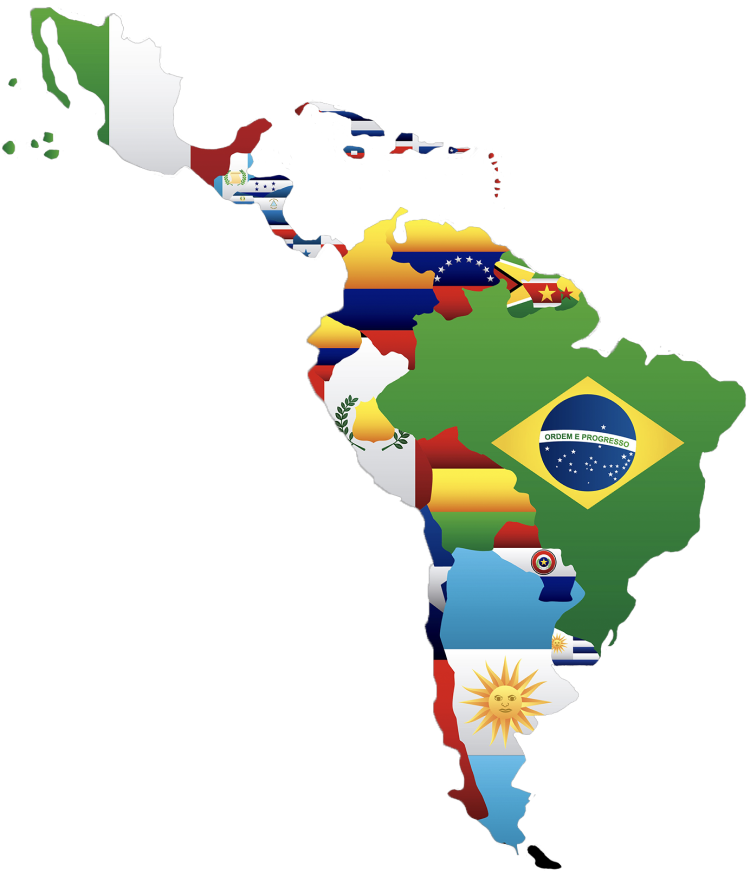

LATAM Chemical Management — To Do List
Four Latin American countries now have active REACH-style chemical management frameworks.
What companies should be doing now:
Peru REACH
✅ Review products against the LCA classification list
✅ Align SDS and labels with GHS in Spanish
✅ Prepare now for 2028 notifications
Chile REACH
✅ Re-notify hazardous industrial substances by August 30, 2026
✅ Map ingredients in hazardous mixtures
✅ Prepare for mixture notifications by August 30, 2027
Colombia REACH
✅ Submit the 2025 annual volume report in INSQUI by September 30, 2026
✅ Protect registration status by meeting reporting deadlines
Brazil REACH
✅ Map substances entering Brazil
✅ Confirm importer status across the supply chain
✅ Evaluate whether an Only Representative model makes sense
✅ Prepare for the registration platform expected in late 2027 Four frameworks.
Overlapping deadlines. One region to watch.
If Latin American chemical compliance is on your radar, now is the time to talk. 📩 Let’s connect: ambientelegal.com

Argentina: GHS Expands to Crop Protection/Lawn Care Products — and Skips Four Versions Ahead
GHS is expanding across Latin America. We are seeing not just new countries adopt it (think: Peru and El Salvador), but its application is expanding in countries where it already exists. Argentina’s latest move is a clear example of that second wave of expansion of GHS scope.
Until now, GHS in Argentina was a workplace requirement. In that context, the country applies GHS Rev. 5 since 2015. As reported earlier, changes to Argentina’s crop protection and lawn care products rules called for liberalization of registration requirements and use of the GHS in this sector. (See Resolution 458/2025 and Resolution 843/2025.)
Now, Argentina’s SENASA has adopted the rules to implement the GHS requirements. SENASA Resolution 373/2026 went into effect on April 25. The country’s national food and agricultural safety authority mandates GHS-aligned labeling for all registered phytosanitary products commercialized in the country — and has done so at GHS Revision 9, the current UN version. The resolution abrogates the previous labeling framework — Resolution 367/2014 — entirely.
The scope is broader than agricultural professionals. Article 15 explicitly brings consumer lawn and garden products within the framework, making this relevant to companies that market phytosanitary products directly to consumers in Argentina — not only to agricultural operators.
The new framework is structured around five annexes:
- Annex I — Model complete label (Modelo de Etiqueta Completa)
- Annex II — Model elementary label for small packaging (Modelo de Etiqueta Elemental)
- Annex III — Acute mammalian toxicity classification table
- Annex IV — Skin and eye sensitization and irritation labeling elements
- Annex V — Environmental hazard tables
Obligations fall on anyone holding phytosanitary product registrations in Argentina. Technical-grade active substances destined for formulation are also covered with their own specific labeling requirements.
For companies with registered phytosanitary products in Argentina — whether sold to agricultural operators or directly to consumers — the framework is already in force. Label review and update processes need to begin now.
Key Takeaway: GHS is expanding in the region — to new countries and even to product categories in others. Expect GHS labeling for consumer products to become the norm. It’s not just for the workplace anymore.
Link to Resolution:
Mexico: Changes to the Rules on Chemical Precursors
A January 2026 amendment to Mexico’s General Health Law (Ley General de Salud) reclassifies pseudoephedrine, norpseudoephedrine, GBL, and GHB (among a broader list of substances) as controlled substances — effective July 14, 2026.
COFEPRIS’s implementing circular (Oficio Circular No. COFEPRIS-CFS-3-2026, Mexico City, April 17, 2026) is addressed to the pharmaceutical sector. But the law’s scope extends to raw materials and reference standards, which means chemical companies supplying into Mexican pharmaceutical supply chains are not off the hook.
Mexico controls chemical precursors through two overlapping frameworks — the Federal Law for the Control of Chemical Precursors (Ley Federal para el Control de Precursores Químicos) on the industrial side, and the General Health Law (Ley General de Salud) on the pharmaceutical side. The January 15 Decree operates through the General Health Law (Ley General de Salud). Whether that creates new obligations for companies, stacks on top of existing ones, or simply triggers documentation demands from customers depends on what they handle and how.
That mapping exercise is what needs to happen now — not after July 14.
And even if a company’s direct obligations are limited, its pharmaceutical customers will be scrambling to comply. Expect supply chain inquiries. Have documentation ready.
Link to Circular: https://www.gob.mx/cms/uploads/attachment/file/1071906/OFICIO_CIRCULAR_No._COFEPRIS-CFS-3-2026.pdf
Mexico: Online Advertising Now a COFEPRIS Enforcement Target
We have written before about how e-commerce platforms are becoming compliance gatekeepers in Latin America — Argentina’s SENASA works with Mercado Libre to detect and remove non-compliant products. Mexico is now moving in the same direction, through a different mechanism.
On March 27, 2026, COFEPRIS signed a formal collaboration agreement with the Secretariat of Security and Citizen Protection (Secretaría de Seguridad y Protección Ciudadana) — specifically its cybercrime and technological operations unit — to monitor products and services advertised online for health regulation violations. The agreement runs until September 2030.
The practical implication is straightforward. COFEPRIS will now flag non-compliant online advertising directly to law enforcement. Misleading claims, unauthorized products, non-compliant labeling — anything that would attract regulatory attention on a physical shelf is now being actively monitored in digital channels, with a direct line to act on it.
For companies selling cosmetics, household cleaners, pesticides, or any other regulated consumer product in Mexico, the digital channel is now part of the compliance footprint. Product claims made online, marketplace descriptions, and whether listings reflect actual regulatory status in Mexico all carry enforcement risk.
In the region, it is clear that compliance is moving upstream — into platforms, into digital channels, into automated monitoring. Mexico just gave that trend institutional teeth.
Argentina: Glacier Protection Law Amended
Argentina’s Congress enacted controversial new Law 27.804 on April 8, 2026, amending the Glacier Protection Law (Law 26.639) that has been in force since 2010.
The core structural change is the devolution of authority to provinces. Under the amended law, provincial governments — rather than the national scientific authority IANIGLA — determine which glaciers and periglacial formations in their territory perform strategic water functions and therefore merit protection. Critics argue this inverts the logic of minimum environmental standards under Article 41 of the Constitution, which sets a national floor that provinces cannot go below. Legal challenges are already underway.
For mining and energy companies, the practical implications are significant:
- The National Glacier Inventory (Inventario Nacional de Glaciares) is no longer automatically binding. Provinces now drive identification and protection decisions.
- A precautionary principle applies: formations listed in the Inventory remain protected until a province affirmatively determines they lack strategic water functions.
- Prohibited activities, including release of chemical substances, mining, hydrocarbon extraction, and industrial operations, remain in the law, but their geographic scope is now subject to provincial determination.
- All projected activities in glacier and periglacial zones remain subject to prior environmental impact assessment with public participation.
The law is already in force. However, constitutional challenges are underway, and the regulatory landscape at the provincial level remains unsettled. The challenges of implementing national standards in a federated republic with a weak national government and strong provincial rights have only been made more complicated with this law. Companies with existing or planned operations in Argentina’s Andean regions should monitor both the litigation trajectory and provincial implementation closely.
Link to Law:
https://www.boletinoficial.gob.ar/detalleAviso/primera/341109/20260424
Brazil/MERCOSUR: Public Consultation Open on Cosmetics Quantity Labeling
Brazil’s Inmetro has opened a 60-day public consultation on a proposed MERCOSUR Metrological Technical Regulation for the Quantitative Indication of Cosmetics (Draft Resolution 02/25), published April 23, 2026. The draft is still at the MERCOSUR level — not yet adopted — and Brazil is collecting industry input to inform its position when the Common Market Group (Grupo Mercado Comum — GMC) meets to finalize the text.
Comments must be submitted through Brazil’s Participatory Platform within 60 days of publication.
The draft would replace the existing rule, establishing how cosmetic, personal hygiene, and toiletry products would declare net content on packaging, with rules that differ by product form:
- Solid, semi-solid, and solid-liquid mixtures — quantity must be expressed in units of mass.
- Gel products — quantity may be expressed in mass, volume, or both. This is the substantive change from the existing resolution, driven by experience since 2000 and aligned with OIML Recommendation R79:2015.
- Liquid products of any viscosity — quantity must be expressed in units of volume.
For cosmetics companies selling across MERCOSUR, this is the moment to engage. Once the GMC adopts the final text, member states will incorporate it into national law and the window for industry input will have closed.
Link to Notice:
https://in.gov.br/web/dou/-/consulta-publica-n-8-de-23-de-abril-de-2026-701135559
Brazil: International Capital Flows Into Taxonomy-Aligned Green Fund
Germany has committed up to €500 million to Brazil’s Climate Fund (Fundo Clima), operated by BNDES and led by Brazil’s Ministry of Environment and Climate Change. The declaration was signed in Hanover on April 20, 2026, alongside parallel commitments from France’s AFD and Italy’s CDP. The Fund has mobilized R$52 billion since 2023 across energy transition, green industry, sustainable logistics, native forests, and water resources.
The connection to Brazil’s Sustainable Taxonomy (Taxonomia Sustentável Brasileira or “TSB”), established by Decree 12.705/2025 on November 3, 2025, is direct. The Fundo Clima is explicitly one of the instruments through which the taxonomy operates in practice. Projects must align with TSB criteria to access it. International capital flowing into the Fund is being deployed against a defined sustainability classification framework, not a loosely defined green label.
The TSB is currently voluntary — but mandatory adoption will follow on a sector-by-sector basis as financial regulators issue implementing rules. For companies operating in Brazil across extractive industries, manufacturing, energy, agriculture, construction, and transport, the direction is clear: taxonomy alignment is becoming a prerequisite not just for green financing, but for access to public procurement and government incentives more broadly.
The scale of international commitment signals that the Fundo Clima and the taxonomy framework behind it have credibility with sophisticated institutional investors. That is worth noting for any company evaluating ESG financing structures or industrial decarbonization projects in Brazil.
For a primer on Brazil’s Sustainable Taxonomy and what it means for industry, see our earlier post here.
Mexico: Moving to Regulate Chemicals with CMR-Style Criteria
Despite a major delay in any modern chemical management legislation (i.e., no “Mexico REACH”), Mexico is making moves that align it closer to the EU and even MERCOSUR by basing the regulation of substances on carcinogenic, mutagenic, and reprotoxic — CMR — criteria. Although the proposal below applies only to the hydrocarbon sector, the move to regulate new substances on this basis is very noteworthy.
- Background
Mexico operates a Pollutant Release and Transfer Register (Registro de Emisiones y Transferencia de Contaminantes or “RETC”), the Mexican equivalent of a PRTR. Under NOM-165-SEMARNAT-2013, fixed-source industrial establishments that release or transfer any of 200 listed hazardous substances above specified thresholds must report annually via the Annual Operating Certificate (Cédula de Operación Anual or “COA”). The obligation also applies to large generators of hazardous waste producing 10 tons or more annually. The RETC covers emissions to air, water, soil, and subsoil, as well as hazardous waste transfers.
- What ‘s New
The 200-substance list under NOM-165 has not been expanded since 2013. PROY-NOM-026-ASEA-2026, a draft Official Mexican Standard published by ASEA, Mexico’s hydrocarbon sector safety and environmental agency, proposes to add 36 substances not currently on that list – identified through analysis of international PRTR registries as generated in hydrocarbon operations but not yet captured under Mexican law.
The immediate scope is the hydrocarbon sector. But the significance extends further: this is the first expansion of Mexico’s regulated substance list since 2013, and the criteria used to justify those additions signal a methodological shift.
NOM-165 relies broadly on toxicity, persistence, and bioaccumulation as inclusion criteria. The new draft goes further — separately defining and applying carcinogenicity, mutagenicity, and teratogenicity as distinct, named criteria with specific threshold values, referenced against IARC and EPA IRIS classifications. This is broadly consistent with the CMR framework familiar to companies operating under REACH in Europe and newly adopted in Mercosur, even if Mexico does not use that terminology explicitly.
For companies tracking the evolution of chemical regulation in Latin America, this is a signal worth noting. Once CMR-style criteria are embedded in Mexican regulatory methodology — even sector by sector — the logic is available for broader application across industries and substance lists.
- Timeline
The 60-day public comment period is currently open. Once finalized, the standard enters into force 180 days after publication in the DOF. Companies in oil and gas, refining, petrochemicals, and pipeline operations in Mexico should review the 36 new substances in particular — these represent a net expansion of reporting obligations beyond what NOM-165 currently requires.
Link to Draft:
Mexico: Data Protection for New Agrochemical Active Ingredients — A Significant Shift
Mexico just changed the way agrochemical products come to market by amending the PLAFEST Regulation.
In Mexico, pesticides, plant nutrients, and toxic and hazardous substances are regulated under one massive regulation known by the Spanish acronym “PLAFEST.” This change, published April 24, 2026, will principally impact agrochemical products by granting a new 10-year data protection period for new agricultural chemical products (nuevos productos químicos agrícolas). A new active ingredient — defined as one not previously registered under the existing framework — now receives protection of its safety and efficacy data from the date of first registration in Mexico. Third parties cannot use that data, or rely on the prior registration, to obtain their own authorization for the same or a similar product without the express consent of the data holder. Critically, this protection applies even where the original registration was based wholly or partly on a foreign marketing authorization.
- Impact on Registration by Equivalency
Mexico’s existing regulatory framework already provides pathways for registration by equivalency — both for technical grade active ingredients, comparing impurity and toxicological profiles against a reference molecule, and for formulated products based on a previously registered formulation. These pathways have historically allowed generic and follow-on products to enter the market with a reduced data package.
The new data protection provision seem to directly affect these pathways. For any new active ingredient registered after April 25, 2026, a third party seeking to register by equivalency will need the original registrant’s express consent during the 10-year protection window. This effectively closes the equivalency shortcut for new molecules during that period — which is precisely the commercial intent of the provision.
Companies planning to use equivalency pathways for new molecules should consider factoring this into their market entry timelines for Mexico. The provision does not affect equivalency registrations for active ingredients already registered prior to the decree’s entry into force.
Keep in mind that this is a significant change – and may result in litigation that impacts its applicability.
- A Regional Contrast — and a Treaty Obligation
Mexico’s move runs counter to the dominant trend in Latin America, where the direction of travel is toward regulatory simplification and faster market access. Argentina is a clear example: its SENASA Resolutions 458/2025 and 843/2025 introduced recognition of registrations granted by countries with high sanitary oversight, reducing regulatory duplication and facilitating access to innovation. (See earlier editions of the Newsletter for details.) That is effectively registration by recognition — the opposite direction.
The important context is that Mexico’s 10-year data protection provision is not a unilateral policy choice — it is a USMCA (T-MEC) treaty obligation. The trade agreement between the United States, Mexico, and Canada has included a 10-year data protection requirement for agrochemical test data since its entry into force. Mexico is, in effect, implementing a long-standing trade commitment. For companies operating across the region, the takeaway is that market access dynamics for new active ingredients now differ significantly between Mexico — where data protection narrows the generic entry window — and markets like Argentina, where recognition-based registration is expanding access.
Additional Changes
- New documentary requirements for registration applications before COFEPRIS, including patent ownership documentation where a product is under active patent in Mexico.
- COFEPRIS must publish and update — at minimum every 30 days — a public database of granted registrations and pending applications.
- Registration renewals are fixed at 10-year terms, subject to COFEPRIS review at any time.
The Ministry of Health has 180 days from the decree’s entry into force to implement the necessary secondary regulatory and administrative adjustments.
Link to changes:
https://www.dof.gob.mx/nota_detalle.php?codigo=5785958&fecha=24/04/2026#gsc.tab=0
© 2026. All rights reserved. This publication is protected by copyright and monitored by AI-powered content tracking systems. Unauthorized use, reproduction, or distribution is strictly prohibited.
