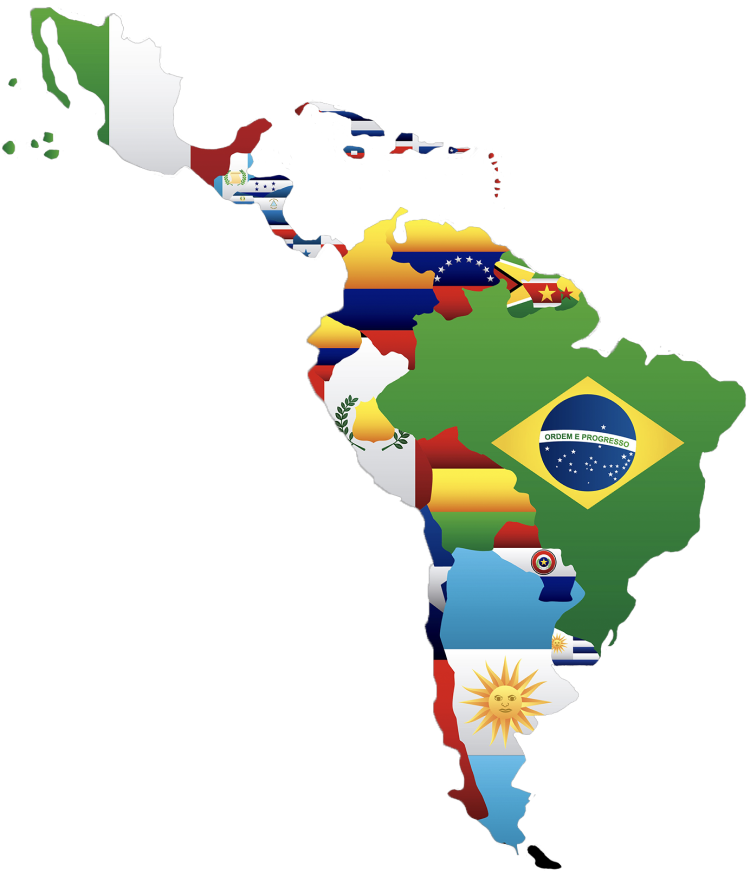

🌎 GHS in Latin America: Where are we now? Where are we headed?
Latin America has embraced the Globally Harmonized System (GHS)—but adoption is anything but harmonized:
⚡ Different revisions across countries
⚡ Different scopes (workplace-only vs. transport, agriculture, consumer)
⚡ And now… consumer product labeling is emerging as the next big wave
📊 Our new infographic shows:
✅Who’s already adopted GHS (and which version)
🚀Which countries are likely to move next
Latin America Chemical Control Law Calendar
📆 Latest edition of the calendar to keep us all up to speed!
👇 Check out the infographic for news on big developments expected the last quarter of 2025 … and into 2026 from: ▶️ Brazil ▶️ Peru ▶️ Chile ▶️ Colombia
Need support on chemical compliance plan for Latin America? We are standing by: mowen@ambientelegal.com.

Brazil’s PFAS Bill Is Moving Again
Latin America’s first national PFAS control bill is moving again in Brazil’s Congress. Until now, PFAS has not dominated headlines in Brazil as they have in the US or EU. This first legislative proposal dates back to 2023, but progress has been slow — until recently.
Where Does the Bill Stand?
The Environment Committee in the Chamber of Deputies is the first of three committees that must vote on the measure.
The committee’s rapporteur (relatora), Deputy Duda Salabert, has recommended approval of a substitute version of the bill (once in 2024 and again just last week in 2025).
On October 1, 2025, the committee began discussing the proposal but did not yet complete its analysis or vote on the relatora’s recommendation. A vote is still pending before the bill can advance to the next committee.
What’s in the Substitute Version?
The relatora’s substitute text calls for:
· Governments (all levels) to implement the National PFAS Control Policy to map, monitor, and control sources of PFAS emissions; set maximum and progressively stricter PFAS concentrations limits in water, air, soil, and food; regulate use, production, and disposal of PFAS; promote health surveillance of exposed populations, among other activities.
· Companies and industries that use PFAS to submit annual reports on use and disposal and adopt measures to reduce use and phase out their presence in products and processes – including monitoring and protecting from occupational exposures.
What Happened to the Labeling Rule?
An unusual discrepancy has emerged.
In 2024, the relatora introduced an early substitute version that included a specific article mandating PFAS labeling. Her current report, submitted with the version now under review, explicitly highlights the importance of this labeling requirement.
Yet, the actual substitute bill text presently before the Committee omits any mention of labeling. The clause appears only in the explanatory report — not in the operative articles of the draft law.
This inconsistency between the relatora’s written justification and the language of the bill itself will likely be clarified as the proposal moves forward.
Key Insights:
· Brazil is poised to join the global movement to regulate PFAS — and potentially lead Latin America in establishing comprehensive national controls. But the final shape of the law, including whether mandatory product labeling survives in the next draft, remains to be seen.
· Expect PFAS regulations to come into Latin America following Brazil’s adoption.
Extended Producer Responsibility on Radar for Argentina
Argentina has lagged behind its South American neighbors in developing national Extended Producer Responsibility laws. Part of the issue is the country’s rugged form of federalism in which the real authority to regulate environmental issues has been understood as resting in the hands of the powerful provincial governments. And several of those – including Buenos Aires province – have taken action to regulate the issues at the provincial level – but the ensuing compliance patchwork makes it difficult to have nationwide take-back and management plans.
Despite the very pro-business libertarian government in office now at the national level, recent reports from the environmental authorities point to a desire to enact something at the federal level. In particular, the Sustainable Industry Directorate is working with industry association and support from international entities (the German Cooperation group) to develop a bill that would cover such universal wastes as used mineral oils, waste electric and electronic products, batteries, used tires, expired mediations, and post-consumer packaging, among others. As someone who has tracked these proposals for over 25 years, I can say that Argentina’s Congress has seen scores of these proposals.
Perhaps this time, with the mature EPR schemes in the neighboring countries and the support of both industry and the current administration it will be the moment for Argentina’s first foray into federal EPR.
Sustainable Data Centers for Brazil
AI takes data centers – and data centers take energy and have emissions. For Brazil, that sector will need to manage those environmental externalities. The Ministry of Environment has developed a Special Taxation Regime for Data Center Services (Redata) that is up for public comment until October 26, 2025.
REDATA’s focus is sustainable data center development focused on environmental respnsibilty through five key pillars:
- Renewable Energy Requirement – Operations must use 100% renewable or clean energy sources.
- Energy Efficiency Index (PUE) – Establishing a metric to minimize the energy used in infrastructure such as data center cooling.
- Carbon Neutrality Mechanisms – Identifying ways to achieve carbon neutrality in direct and indirect data processing operations.
- Water Efficiency Index (WUE) – Setting strict standards for responsible water use in the cooling of processors and IT servers.
- Circular Economy Measures – Encouraging waste reduction and reuse strategies in line with circular economy principles.
REDATA is part of the larger National Data Center Policy (itself a part of the New Industry Brazil initiative). Brazil hopes to have it all – sustainability as well as cloud computing, AI, smart factories, and IoT.
Brazil’s New War on Ocean Plastics
Everyone by now knows that the UN has not been able to deliver on a global treaty to tackle plastic pollution – yet. Brazil is not waiting around. It just published it “Oceans without Plastic” National Strategy 2025-2030 (Portuguese acronym “ENOP”). ENOP’s overall goals is to guide and coordinate public policies to prevent, reduce, and eliminate plastic pollution in oceans and coastal environments, through coordinated national and international actions.
As one would expect of such a broad initiative, the main goals include combating plastic pollution through the entire plastic life cycle – and recognizes the role of the legion of informal waste pickers in the country. Regulation and Standards is one of the eight pillars of the program. Look for new bans on microplastics and phasing out single-use plastics – the latter popular with Brazil’s South American neighbors like Colombia and Peru.
The Ministry of the Environment will coordinate the ENOP, in collaboration with the Ministries of Science and Technology, Fisheries and Aquaculture, and Industry and Commerce. A federal Action Plan will be published within 90 days of the decree, and we will get more information there on the plans for new and revised laws and regulations.
Key Insight:
· Look for new federal rules on single-use and microplastics in the medium term.
· Expect plastics to continue to be high on government agendas across the region following last week’s Forum of Environment Ministers of Latin America and the Caribbean in the Lima Declaration which ad a focus on plastics and stated: “We underscore the importance of accelerating circular practices across key sectors, such as plastics and textile industries, food systems, construction, tourism, and electronics, …”.
Link to ENOP:
https://www.in.gov.br/en/web/dou/-/decreto-n-12.644-de-1-de-outubro-de-2025-659715944
Where are Chemical Regulations Headed in Latin America?
Take a look at the Action Plan for Regional Cooperation on Chemicals and Waste Management 2026-2029 just released by the Intergovernmental Network on Chemicals and Waste for Latin America and the Caribbean during the XXIV meeting of the Ministers of the Environment of the region. Focus on GHS, expanding LatAm “REACH”-inspired laws, and more are on the agenda. Although national laws are where the “rubber meets the road” for industry, these regional plans – and the monies and training offered through them – are often the regulatory vanguard, harbingers of what is to come.
Link to the Action Plan:
https://docs.google.com/document/d/1DgRqIfGhCixJ5LpY22WR9doBO-Pzj1D_/edit
Chile’s Mandatory EPR for Textiles Taking Shape
As readers know, Chile is expanding its mandatory EPR regulations to cover textiles – think waste clothing. At a major event to celebrate its national environment day, the government announced its National Circular Economy Strategy for Textiles to 2040. New regulations will form the backbone of the “Circular Regulation” Axis of the strategy.
Based on the Strategy, industry should expect regulatory measures on:
· Product traceability and disclosure requirements
· EPR for textiles that covers collection, reuse, recycling and proper disposal
· Eco-design and durability standards
· Waste recovering and recycling rules
Key Insight:
· Fashion and textiles producers and importers active in Chile should be on the lookout for draft standards in the coming year.
· Expect the trend to be adopted across the region as Brazil considers a bill on the issue and last week’s Forum of Environment Ministers of Latin America and the Caribbean in the Lima Declaration called out textiles specifically: “We underscore the importance of accelerating circular practices across key sectors, such as plastics and textile industries, food systems, construction, tourism, and electronics, …”.
Brazil: Judge Suspends Coal Plant Operations for Climate Impact
A Brazilian court just made history: for the first time, a judge suspended coal plant operations because of their climate impact. Climate law is no longer theory — it’s enforcement.
A federal court suspended the operating licenses of a thermoelectric plant and a coal mine in Rio Grande do Sul. The court found that the environmental agencies IBAMA and FEPAM failed to include climate-impact assessments as part of the environmental licensing procedures for activities with high greenhouse gas emissions.
The court ordered both agencies to add climate conditions to the licenses by January 31, 2026, under daily fines for noncompliance. The Union and the State of Rio Grande do Sul must also present a joint plan for a just energy transition for the coal sector by the same date.
Key Insight:
· This is one of Brazil’s most important climate rulings to date. It establishes that climate considerations must be integrated into environmental licensing for fossil-fuel projects and compels authorities to design a just energy transition strategy.
· The decision underscores the growing role of the judiciary in enforcing Brazil’s climate obligations and marks a precedent for climate accountability in the country’s energy sector.
LATAM “REACH”: COURSES AND KEY DOCUMENTS
It can be challenging to tackle registration of chemicals in Latin America. Knowing what to do when you are not a Spanish or Portuguese native speaker makes it even more challenging. The governments in the region publish their laws and key guidance documents in their official languages (Spanish for Chile, Colombia and Peru and Portuguese for Brazil).
To help companies overcome these challenges, we have created online video Crash Courses on chemical registration and reliable English translations of key documents at affordable prices.
· COURSES:
o Crash Course on Colombia “REACH”: https://ambientelegalacademy.teachable.com/p/crash-course-on-colombia-reach
o Crash Course on Chile “REACH”: https://ambientelegalacademy.teachable.com/p/crash-course-on-chile
· ENGLISH TRANSLATIONS OF KEY DOCUMENTS:
Purchase quality English translations of key laws and official government guides for immediate download:
Brazil “REACH” Law: https://ambientelegalacademy.teachable.com/p/brazil-reach-law-15-022-english-translation-708823
Colombia “REACH” Instruction Guide: https://ambientelegalacademy.teachable.com/p/colombia-s-instruction-guide-for-the-chemical-registration-system-576265
Chile “REACH” Instruction Guide: https://ambientelegalacademy.teachable.com/p/my-downloadable-546021
🤝 Need support with registration and reporting?
👉 Learn how we can help: https://ambientelegal.com/services/
