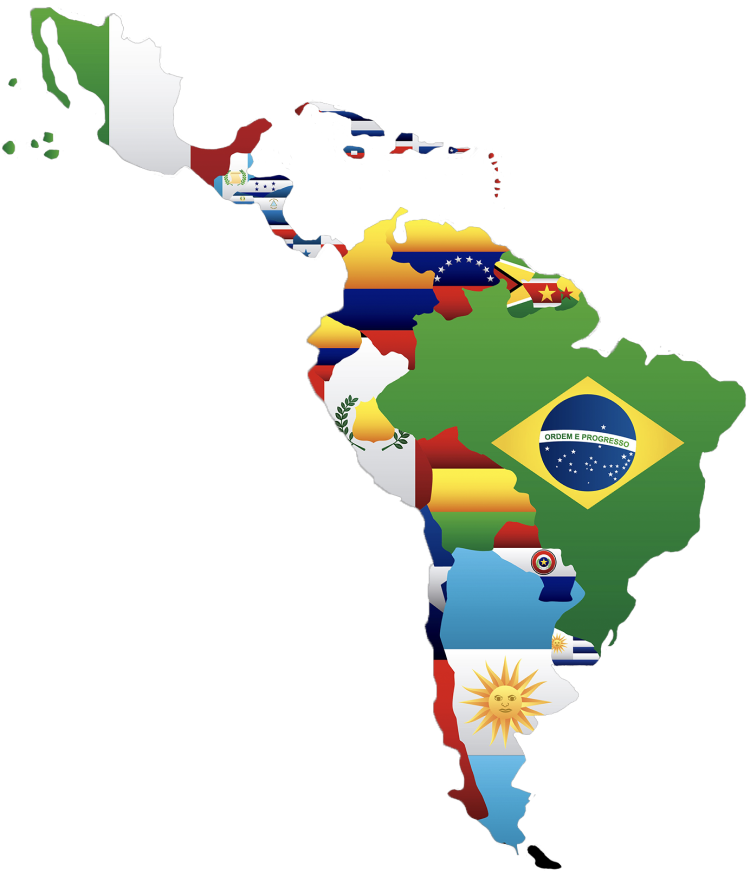

Last week, Peru opened its doors to the 6th Annual Meeting of the Latin American Chemical Regulatory Cooperation Forum (LARCF) — a unique gathering that brings together chemical regulators, the regulated community, and international specialists in a spirit of cooperation and knowledge sharing.
In just two days, ten different countries — Brazil, Argentina, Chile, Colombia, El Salvador, Honduras, Dominican Republic, Uruguay, Ecuador, and of course Peru — presented updates and challenges related to their move toward modern chemical regulatory frameworks.
International organizations including United Nations Environment Programme (UNEP) and Organisation for Economic Co-operation and Development (OECD), along with international chemical industry associations, provided global perspectives and recommendations. Industry shared its real-life experiences with the new REACH-inspired national registration schemes in Colombia and Chile, while regulators discussed how implementation has unfolded on the ground.
🧭 My Meta Observations
- Countries in the region are at different stages along the chemical control pathway: Colombia and Chile are already talking prioritization and risk assessment, while Honduras and others are still moving toward adoption of the Globally Harmonized System of Classification and Labelling of Chemicals (GHS).
- There is no single “right” entry point, but the consensus was that GHS adoption is a key step that facilitates subsequent developments (e.g., hazard classification before registration).
- OECD remains the principal driver for adoption of chemical regulations, supported by UNEP, UNITAR, and funds from the GFC and the ICCA.
- The four-part chemical control pathway — chemical inventories, prioritization, risk assessment, and risk management measures — inspired by the EU, US, and Canada, is being localized across the region.
- Political changes and funding challenges continue to slow progress — but momentum is steady and growing.
- Regulators seem more focused on broad compliance than strict sanctions at this stage.
- For first-mover countries like Colombia and Chile, determining how and what substances to prioritize for risk assessment is the next big challenge.
Now, what are some of the key takeaways I noted from the presentations by national officials?
🇧🇷 Brazil
- ➡️ Expect the Implementing Regulation to their REACH-inspired law before the end of this year.
- ➡️ The registration platform that will signal the start of the three-year registration period for industry should be ready by the November 2027 deadline.
🇨🇴 Colombia
- ➡️ The first national inventory will not be a published list — instead, a series of innovative dashboards will soon be publicly available on the INSQUI website.
- ➡️ Anyone will be able to check whether a substance has been registered and access rich data on the over 4,500 substances registered by the May 30, 2025 deadline.
- ➡️ The long-awaited regulation on prioritization of substances should be out early next year, clarifying what is considered a “new substance” now that the first inventory is available.
- ➡️ Application of GHS to consumer goods is likely still some way off.
🇨🇱 Chile
- ➡️ Expect the regulation on prioritization and risk assessment before the end of the year.
- ➡️ The first national inventory of hazardous industrial substances should be published at the end of this year.
- ➡️ Officials noted that the number of substances and companies that notified (registered) by the 2024 deadline for hazardous industrial substances (“pure” or not in mixtures) was below expectations.
- ➡️ This same category is scheduled for its first biennial re-notification in 2026, and regulators plan outreach to encourage companies to register covered substances even if they missed the 2024 deadline.
🇨🇷 Costa Rica
- ➡️ The government appears to have prioritized 34 products (though there is still some confusion over product vs. substance). More information to follow.
- ➡️ The promised total overhaul of Decree 40457-S has yet to be published.
🇵🇪 Peru
- ➡️ The implementing regulation to Peru “REACH” is almost ready for publication, though recent government changes pose some challenges to final approval. Expect publication by the end of this year, with the regulation taking effect six months after publication.
- ➡️ The threshold for Peru “REACH” will only be published in 2027 in a special resolution.
- ➡️ Phased compliance deadlines will roll out in 2028, 2029, 2030, and 2032 for different substance categories.
🇭🇳 Honduras
- ➡️ With support from international agencies, a first regulation on chemical substances is in development.
🌎 Final Reflection
What stands out most from these meetings is the spirit of sharing, transparency, and genuine collaboration between regulators, industry, and international organizations.
Despite the political and economic challenges the region faces, the collective determination to build robust, modern chemical management systems is clear — and progress, even if sometimes delayed, feels unstoppable.
Latin America remains at the intersection of my work and my passion.
📚 Capacity Building: Courses & Trusted Translations
Navigating evolving chemical regulatory frameworks in Latin America requires clarity, accuracy, and practical know-how.
To support companies and professionals working in this space, we offer:
- 🧭 Specialized courses on “LatAm REACH” frameworks — including details on inventory and registration requirements, prioritization processes, and implementation timelines for CHILE “REACH” and COLOMBIA “REACH”.
- 🌐 Trusted translations of key regulatory texts — including regulations and official instructions guides for registration — translated with precision.
👉 If your organization needs to build internal capacity or stay ahead of regulatory change, these resources can help ensure compliance and reduce costly delays.
All available online from anywhere in the world at AMBIENTELEGAL ACADEMY: https://ambientelegalacademy.teachable.com/p/home
© 2025. All rights reserved. This publication is protected by copyright and monitored by AI-powered content tracking systems. Unauthorized use, reproduction, or distribution is strictly prohibited.
